WWII Comic Arts and Propaganda
Political Cartoons
Political cartoons have played an active role in US culture and politics since the mid-eighteenth century, when their modern incarnation rose in popularity. What began as posters and street flyers quickly grew in acclaim with the rise of newspapers and print magazines, and provocative cartoons began driving readers to the newsstands. By using a rich mixture of caricature, comedy, and commentary, political cartoons are able to engage with controversial topics and sway their audiences to their viewpoint, promoting or demoting general opinion and governmental authority.
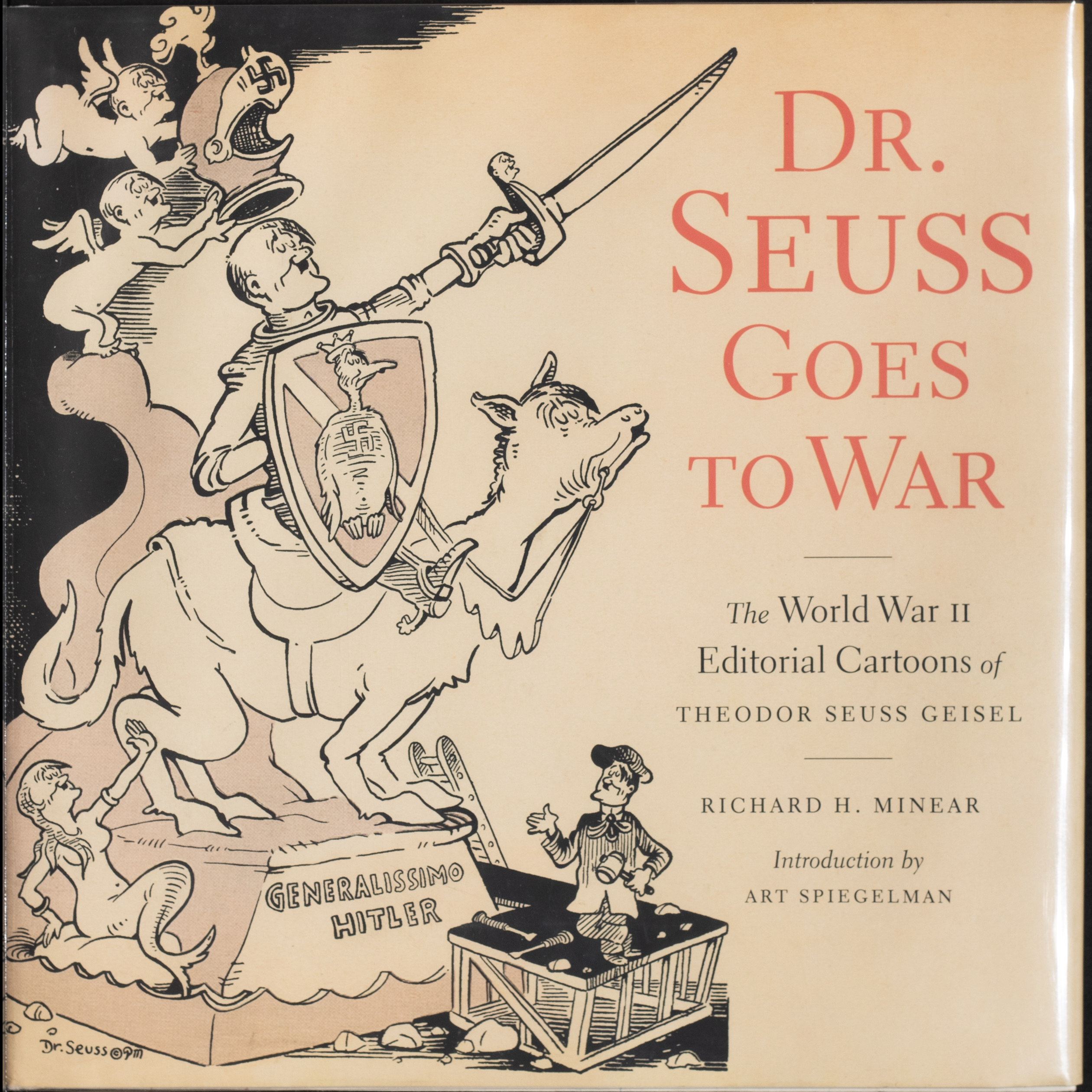
Dr. Seuss Goes to War
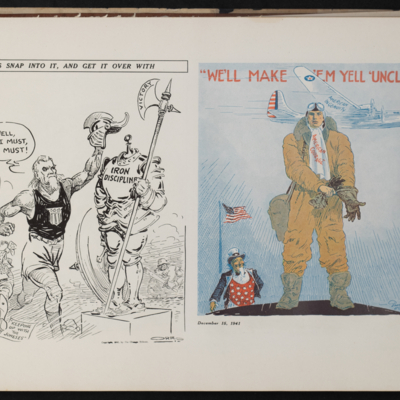
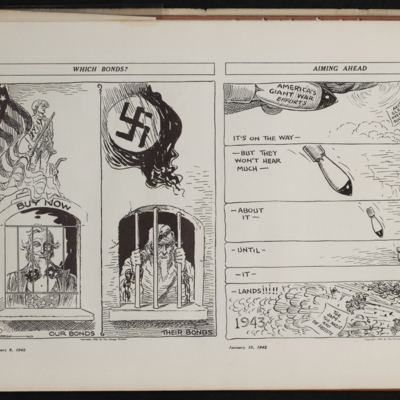
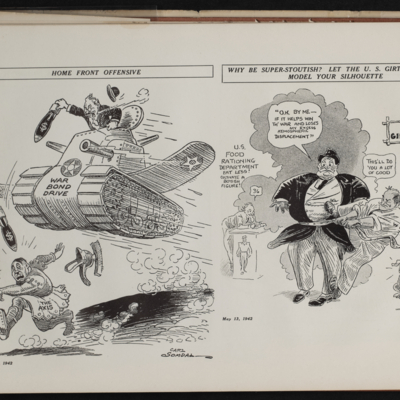
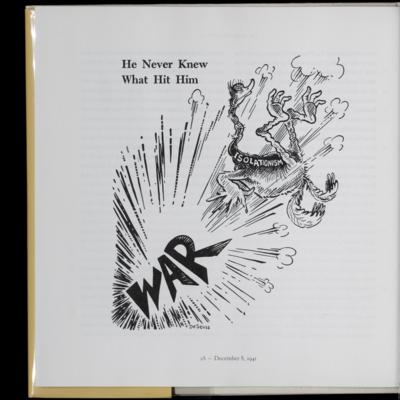
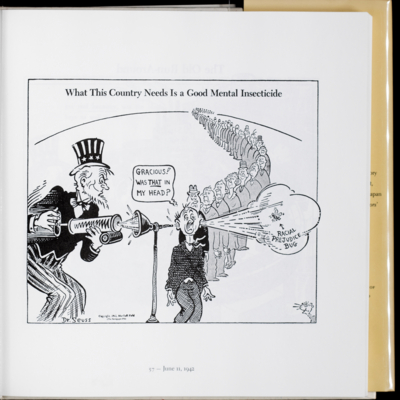
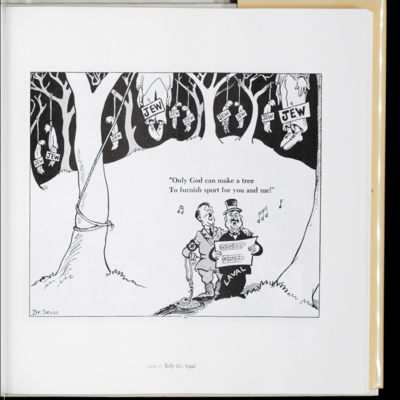
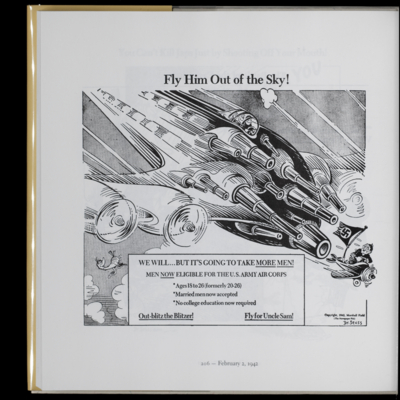
Theodor Seuss Geisel, better known by his pseudonym Dr. Seuss, started his career writing political cartoons for the New York newspaper PM in 1941. Geisel’s cartoons focused on the political injustices within the US and heavily criticized the country’s desire for isolation from the events in Europe. The cartoons condemned racial segregation and Jim Crow laws, as well as antisemitism in the United States; at the same time, Geisel characterized Japanese soldiers in explicitly racist ways. This process of “othering” was often seen during the war on both sides, with either side portraying their citizens as heroic and powerful and the opposing forces as evil, villainous “others.” Geisel draws many members of the Axis as odd and grotesque monsters, though his portrayals also come off as almost buffoonish and goofy, something to be laughed at. Geisel’s cartoons also promoted the purchase of war stamps and bonds to provide funding to the troops on the home front.
War Cartoons
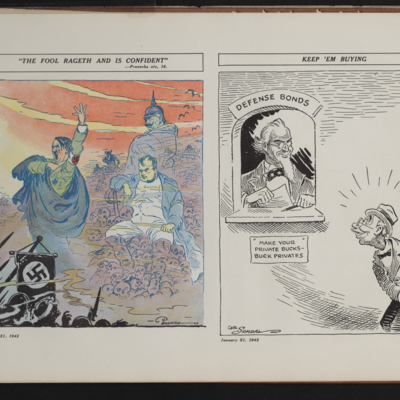
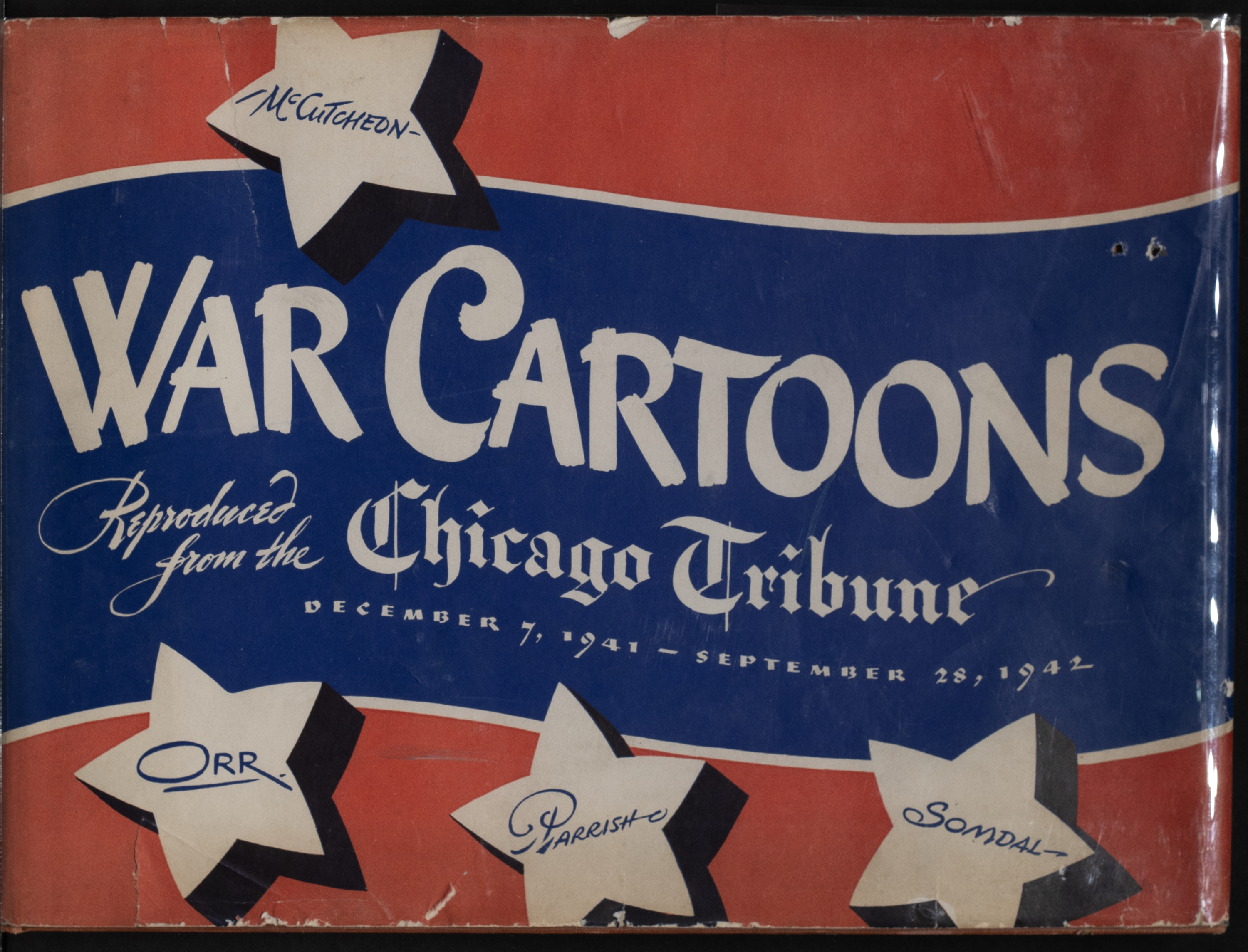
War Cartoons contains a series of political cartoons published in The Chicago Tribune during the first nine months of the US’s involvement in the war from 1941-1942. The collection features work by John T. McCutcheon, Carey Orr, Joe Parrish, and Carl Somdal. Like Geisel’s work, many of these cartoons were created to encourage Americans to purchase war bonds and stamps. The single-panel cartoons also emphasize the labor front in the US and its effect on the war effort. While Nazi Germany and the Axis forces are the focus of most of the cartoons, many depict racist caricatures of Japanese soldiers contrasted with athletic, handsome all-American ones. Similarly to the depictions of Japanese soldiers, members of the Nazi army are drawn as piggish brutes and even demons and devils, equating the work of the Axis group to pure evil. In one cartoon, Joe Parrish depicts Adolf Hitler giving a speech to the Nazi army. In the background of the image, Napoleon Bonaparte and Kaiser Wilhelm II hover like ghosts posed on a mountain of skulls. The caption is a reference to Proverbs 14:16: "The fool rageth and is confident."