WWII Comic Arts and Propaganda
Graphic Memoirs
In 1978, Will Eisner published A Contract with God, widely considered to be the first graphic novel. Eisner’s novel featured weighty themes of grief, antisemitism, religion, and domestic violence. The principal story of the book, “A Contract with God,” is based on Eisner’s own grief over the loss of his daughter, and consequently his struggle with his faith. The book transformed previous opinions of the artform from juvenile to significant, and opened the door for other artists to share their stories using the genre.
Maus
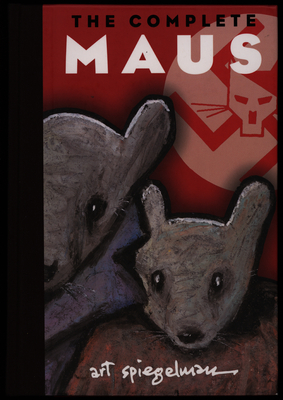
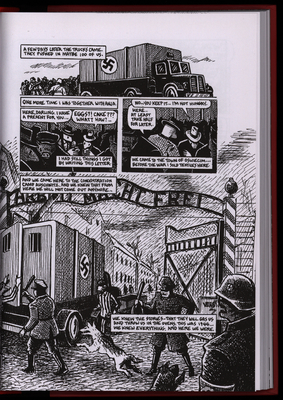
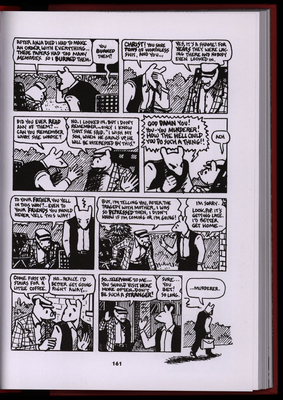
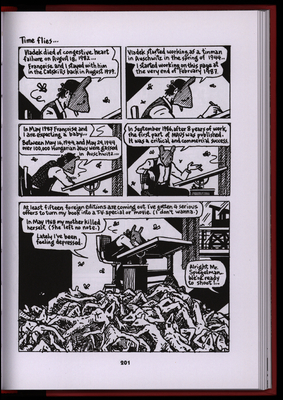
The graphic novel became more popular in the 1980s with the publication of Art Spiegelman’s groundbreaking memoir, Maus: A Survivor’s Tale, in 1986. The story follows Spiegelman as he interviews his father, Vladek, about his and his late wife’s experiences in Poland during World War II. The thirteen-year project follows Vladek and Spiegelman’s mother, Anya, during their time in Auschwitz, depicting violent imagery and the realities of the Holocaust. Spiegelman also explores its effects on his parents, illustrating the erasure of Anya’s journals following her suicide and the anxious living situation between Vladek and his new partner. The graphic novel is a way for Spiegelman to explore and digest his own relationship to his father and to the Holocaust, studying the generational trauma that came as a result of the war. Spiegelman won the Pulitzer Prize for Maus in 1992, and the book redefined the graphic novel as a medium to examine weighty and traumatic subjects. Many schools continue to teach Maus in their curriculums; however, the novel has also faced many book bans.
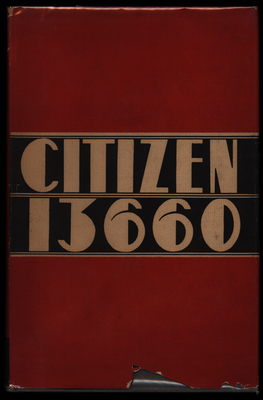
Citizen 13660
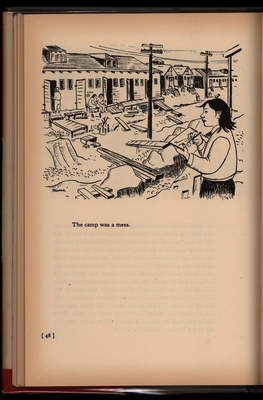
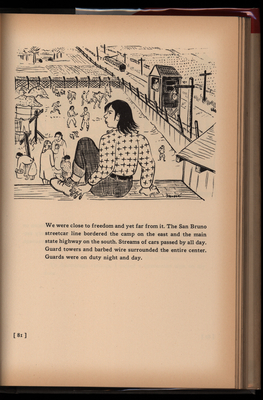
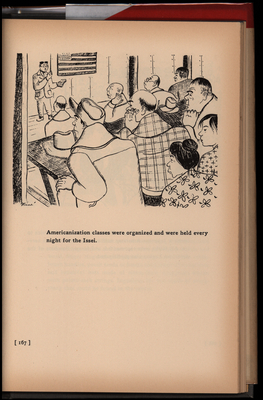
While Maus is widely regarded for popularizing the graphic novel in the United States, other graphic memoirs about the war appeared much earlier. Miné Okubo, an accomplished Japanese American artist and writer, was a resident of the United States’ Japanese internment camps from 1942 to 1944. During her time in the camps, she was never without a sketchbook. There, she produced the drawings that would later appear in Citizen 13660, a graphic novel documenting her experiences within the Tanforan relocation center and the Topaz internment camp. The book contains sketches accompanied by minimal text displaying the inhumane conditions of the camps in contrast to the growing community that was able to persevere in those spaces.
During her time in incarceration, Okubo worked as an art teacher and aided in founding two art schools at both Tanforan and Topaz. Okubo also worked on a literary review titled “Trek” with other internees, providing illustrations for the magazine. She left Topaz in 1944 after her art caught the eye of Fortune magazine, which hired Okubo to be an illustrator in their New York offices. Citizen 13660 was published in 1946, and Okubo went on to testify about her experiences before the federal Commission on Wartime Relocation and Internment of Civilians in 1981. Okubo’s story is one of perseverance, and her book offers insight into one of the darkest parts of the United States history.
Barefoot Gen
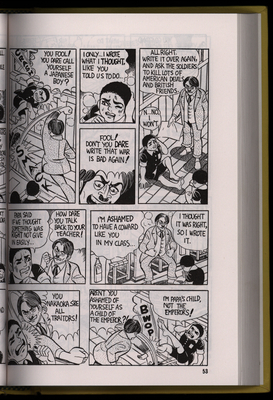
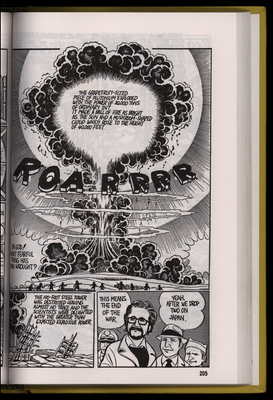
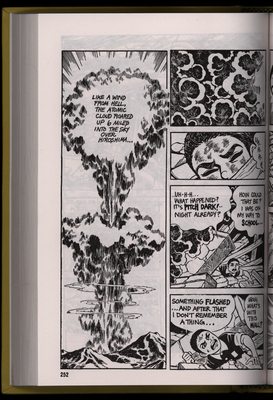
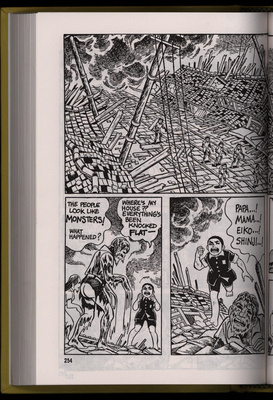
Serialized in 1973 and later published in 1974, Hadashi no Gen, or Barefoot Gen, is Japanese artist Keiji Nakazawa’s second semi-autobiographical graphic novel about the war, retelling his life experiences in Hiroshima, Japan, before and after the atom bomb fell on August 6, 1945. The manga, a Japanese term for comics and cartoons produced in Japan, illustrates Nakazawa’s memories of the bomb: Parades of half-dead bodies with their skin melting from the radiation, people crushed under the wreckage of buildings, and burned corpses scattered throughout the streets. The title character races through the chaos, looking for his family, and is forced to pull his mother away from their burning house as his father and siblings struggle under the ruins. These horrifying illustrations show a hellscape caused by the atomic bomb in Hiroshima, capturing the confusion and terror of those who managed to survive the initial blast.
The moving imagery of Barefoot Gen spoke specifically to Masahiro Shima and Yukio Aki, two Japanese peace activists who brought a copy of Hadashi no Gen to the 1976 Transcontinental Walk for Peace and Social Justice across the US. After seeing how the text affected other participants of the walk, the two started a non-profit organization called Project Gen, which sought to translate the volumes of the graphic novel into different languages, including English, French, German, Russian, among others. Barefoot Gen became the first English manga translation with original artwork to be published in the US. By sharing Nakazawa’s story, the group hopes to prevent humanity from repeating the bombing at Hiroshima.