home Uncategorized Celebrate Open Access Week: Mizzou Authors Published 1,102 OA Articles in 2025

Celebrate Open Access Week: Mizzou Authors Published 1,102 OA Articles in 2025

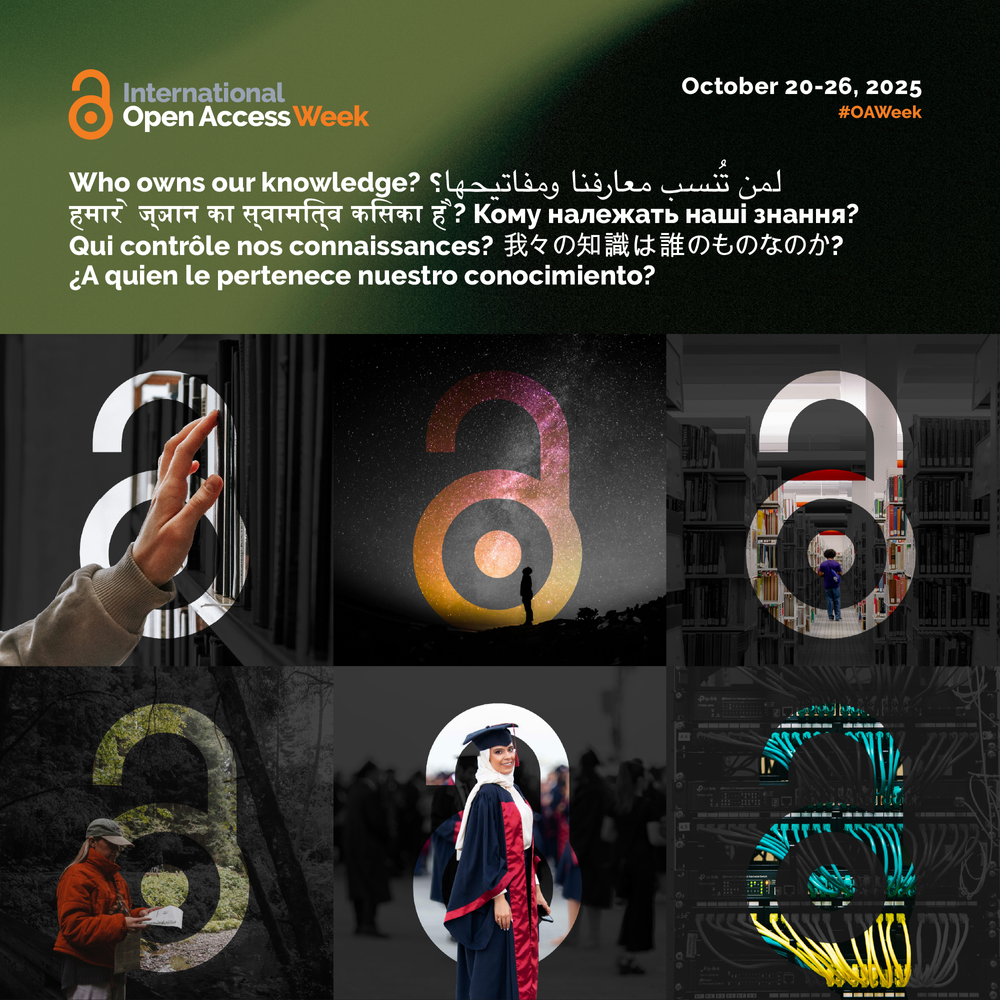
International Open Access Week is October 20-26. This year’s theme,

Who Owns Our Knowledge, encourages reflection on how knowledge is distributed, produced, and shared, and who has access to and control over it.

So far this year, Mizzou authors have published 1,102 open-access articles. These articles have already been cited 977 times: sixteen of which have been listed as Web of Science highly cited papers.

Thank you to all of our Mizzou authors who choose to publish open access.


home Uncategorized Dine & Draft: Write with Support (and Sandwiches!)

Dine & Draft: Write with Support (and Sandwiches!)

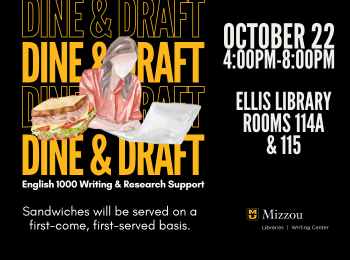
Got an English 1000 paper to tackle? Join us for the very first Dine & Draft on Wednesday, October 22, from 4–8 p.m. in Ellis Library rooms 115 and 114a. This event is designed just for English 1000 students who want to make real progress on their draft while having support (and food) nearby.

Here’s how it works: bring your draft-in-progress, even just your notes and outline, and settle in for a productive writing session. Writing Center tutors and research librarians will be available throughout the evening to answer your questions, give feedback, and help you move forward with confidence. Whether you’re brainstorming, structuring your essay, integrating sources, or polishing your citations, you’ll have experts right at your side.

And because writing is always easier when you’re not running on empty, we’ll have sandwiches for the first students who arrive, along with a relaxed, focused environment to keep you fueled. Think of it as a study session meets writing workshop, with a little extra motivation to get that draft done. Don’t miss this chance to knock out your English 1000 paper with expert help for when you get stuck!

home Uncategorized Cycle of Success: Special Collection Instruction in Middle School Field Trips

Cycle of Success: Special Collection Instruction in Middle School Field Trips

Revision of article written by Clare Starkey, Haley Lykins, and Kelli Hansen

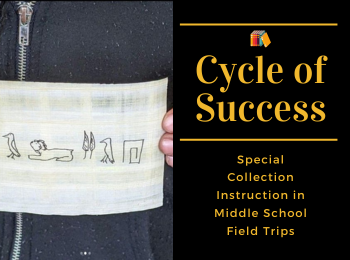
The University of Missouri’s division of Special Collections holds over 100,000 items, dating from the eighth century to the modern era, and focuses on books, periodicals, manuscripts, maps, posters, printed ephemera and artifacts. Though the typical patrons are collegiate researchers, classes for elementary and middle school students are common and are an important part of the University of Missouri’s mission to benefit all Missourians. In the spring of 2024, Special Collections at the University of Missouri hosted a series of field trips for every sixth grader in the Columbia Public School (CPS) district—more than 1,300 students—under the theme of “Ancient Writing Technologies Lab: Cuneiform, Papyrus, Palm Leaves, Oh My!” This workshop gave students a chance to experience ancient writing technologies from across Africa and Asia while interacting with primary sources. Conceived in consultation with the school district’s social studies coordinator, the Special Collections staff provided hands-on activities on the history of the book to complement the school curriculum on ancient Mesopotamia, Egypt, India and China.

Public Services Archivist Haley Lykins stated, “It was exciting to see our primary sources utilized by a new age group. The experience taught us to look beyond the walls of our academic institution for opportunities of outreach and instruction.”

The students rotated between three workstations representing the ancient world. Items from the University’s collection were included to provide a real-life example of the focus of each station and included cuneiform tablets, papyrus fragments and a facsimile palm leaf book. The students visited the University of Missouri campus over the course of 14 field trips throughout April and May. In addition to Special Collections, students visited the University of Missouri’s Museum of Art and Archaeology, Museum of Anthropology, and Francis Quadrangle. Although Special Collections hosted only 10-25 students at a time, around one 100 students overall visited each field trip day.

In each 25-minute session, groups of 3-8 students would spend 7 minutes at a station before rotating to the next one. Each station began with a short informational presentation about the collection item before moving onto the activity. The workshops included making replica cuneiform tablets using playdough, drawing hieroglyphics on papyrus using calligraphy markers, and creating replica palm leaf books by writing stories on long strips of paper and tying them together with yarn. The learning objectives for the workshops were to discuss different writing surfaces from different times and different parts of the world, to describe the advantages and disadvantages of the different surfaces; and to interpret, analyze and evaluate primary sources.

After the field trips, Joy Bass, the social studies coordinator for CPS, said, “Just wanted to let you all know that teachers AND students have rated your ‘station’ very high in their reflection surveys and SO many have said it’s been their favorite.”

home Resources and Services, Uncategorized New Book: Treasures of the Ukraine: A Nation’s Cultural Heritage

New Book: Treasures of the Ukraine: A Nation’s Cultural Heritage

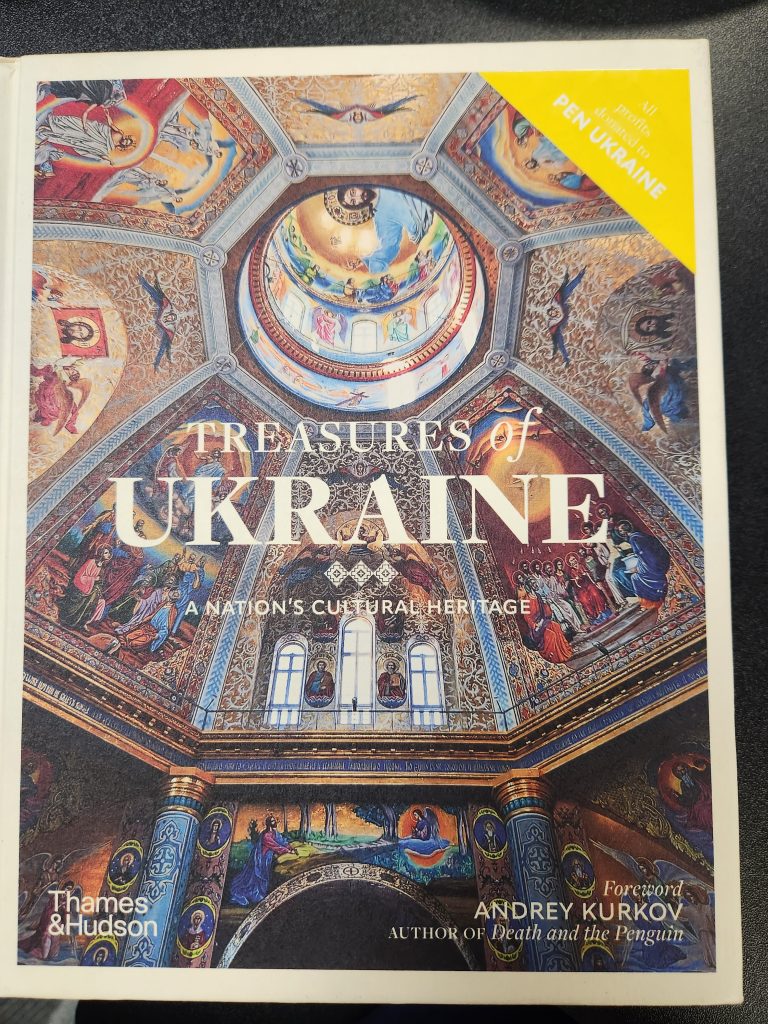
Ellis Library has acquired the book “Treasures of Ukraine: A Nation’s Cultural Heritage.” All profits are donated to PEN Ukraine,”a cultural and human rights non-governmental organization uniting Ukrainian journalists, writers, scientists, publishers, translators, human rights activists.” Call number N7255.U47 T74 2022.

“Treasures of Ukraine” celebrates art and monuments from Ukraine, showing more than one hundred objects and buildings. The information and objects range from the prehistoric era to contemporary art with a special chapter on folk art.

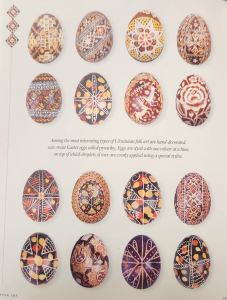
One of the most popular and interesting types of folk art is pysanky, the art of decorating eggs. A small hole is drilled into an egg to drain the contents, and they are then hand decorated using a wax resist tool known as a kistka, which allows the artist to “write” with wax. The egg is dipped in dye and drawn on again and again, and the wax is then melted off with a candle to reveal the final design.  These can be simple designs but are often incredibly detailed. This tradition dates back to pre-Christian spring rites.

Ukrainian folk art is also seen in ceramic work, dating back generations.  According to a document from 1834, serf master potters were required to make thousands of creations a year for their wages.  Once serfdom was abolished, potters continued to make their goods to sell at markets. Another popular example of Ukrainian folk art is the vyshyvanka, an embroidered shirt for men and women, often with vastly different designs, based on the artist’s region. A common theme running through Ukrainian folk art is the use of color. Whether seen in embroidery or eggs, the use of bright colors is seen throughout.

“Treasures of Ukraine” is a beautiful book featuring dozens of images of art and monuments, showcasing the best of Ukraine. It’s definitely worth a read (or look!).

Interesting in trying pysanky? Check out this shop!

View contemporary pysanky art on Instagram

View vyshyvanka on Instagram

home Resources and Services, Uncategorized 100 Years After His Discovery, King Tut and His Tomb Remain Shrouded in Mystery

100 Years After His Discovery, King Tut and His Tomb Remain Shrouded in Mystery

To read more about King Tut, the discovery of his tomb, and the Grand Egyptian Museum, please check out the library’s November 5, 2022, copy of New Scientist and the November 2022 issue of National Geographic both available in the current journals/periodicals section on the 1st floor of Ellis Library.

Amongst the myriad of anniversaries around the world, there is a 100 year anniversary you may not be aware of: the discovery of the tomb of King Tutankhamun.  While this was an invaluable discovery, the mysteries surrounding the tomb and those who found it continue today.

Most of us learned about King Tut in school, yet little has been written about the boy king, who died in his late teens.  Instead, it’s the artifacts found within the tomb that have led to the discovery of many aspects of his life.   Much of Egypt’s past was brought to life through King Tut’s burial, including clues about trade routes around the Nile, the incredible wealth of Egypt’s 18th dynasty, and how kings were buried in Egypt.

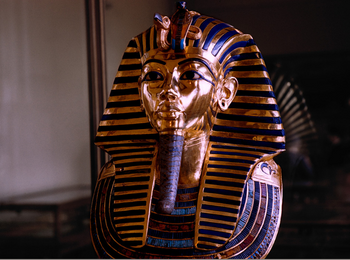
This last discovery was a surprise to many, who were unaware of the extravagant burial traditions of the Egyptians.  Tutankhamun was buried with a mask made of gold, glass, and semi-precious stones. Life-size statues guarded his burial chamber.  These were vessels designed to allow the pharaoh’s ka, or life force, to inhabit them in the afterlife. More than 200 pieces of jewelry were found, along with golden beds, chariots, a golden throne, and a massive sarcophagus containing three nesting coffins, all showing King Tut with the curving beard we’ve seen in pictures, in the likeness of Osiris, the god of the dead.  Guardians wrap the coffins in their protective wings, and the mummy itself was found in the innermost coffin, made of 243 pounds of solid gold.  Though over 5,400 objects were found throughout four separate rooms, King Tut’s tomb was considered small by most standards, but was filled with everything you would typically see in this society, who wished him to have whatever he needed to live like a king for all eternity.

Simply cataloging and discussing the artifacts in the tomb could (and have) filled books, but what has fascinated people throughout the years are the mysteries surrounding the tomb.

The first is the “Curse of the Pharaohs,” which is allegedly cast on anyone who disturbs the mummy of an ancient Egyptian. Though there have been tales of curses going back to the 19th century, but after the tomb of King Tut was opened, the stories multiplied based on the misfortune of several members of the excavation team.  The number of people who visited the tomb, as well as the number of people who died suspiciously, varies, but the most famous is that of Lord Carnarvon, the sponsor of the dig, who died five months after the discovery of an infected mosquito bite.  One man died of pneumonia in 1923, another died soon after x-raying the mummy in London, another died by suicide in 1924, and Carter’s personal secretary died in 1929. Another man was allegedly given a gift from the tomb and his house burned down shortly after. Other deaths have been attributed to the “curse,” but one who thought it was all ridiculous was Howard Carter, the man who led the dig.  Carter died of cancer 17 years after the excavation and never believed in the curse, but the lore surrounding it has continued, with some thinking that a specific mold or bacteria could have led to some deaths, leading doctors to conduct actual studies regarding the statistics of deaths and illnesses vs those who were just fine, and have found no correlation between the tomb and the misfortune of those unlucky few.  But everyone likes a good story, and the curse story has only grown, prompting the creation of several books and movies.

A second mystery concerns a dagger found in the tomb.  When examining the bindings of the mummy, Carter found a dagger that seemed out of place.  The sheath was gold, as was common, but the blade was iron, a metal that was smelted in Egypt until centuries after Tutankhamun’s death.  How did it end up there?  For years, people assumed the dagger was imported from some far away place, or perhaps gifted by a diplomat from a foreign country.  However, we now have the technology to study the dagger. In 2016, it was confirmed that the iron originated from much further away than previously thought, and contained high levels of nickel associated with meteoric iron, meaning that to the Egyptians who wrapped it close to the pharaoh’s body, it was a gift from the gods. While this discovery is significant, more important is the fact that in the current study of archaeological finds, the mummy would not have been unwrapped to pull the dagger out and catalog it – instead, scientists can now use x-rays and CT scanners to create 3D images of what is contained inside the mummy, even 3D printing replicas of the internal structure.  King Tut’s mummy was scheduled to go on an international touring exhibition in 2010, but was deemed to fragile, so the curators were able to print a realistic replica of the pharaoh.

The final mystery is one that has been studied since the tomb was found – how did the young king die? Often depicted with a staff, many have thought that King Tut had scoliosis and/or a club foot.  In 1968, Tut was x-rayed for a documentary and was found to have evidence of a blow to the head, leading to multiple murder theories, but it turns out that the scan was simply showing something that wasn’t really there.  In 2005, a CT scan showed that the pharaoh’s left femur was broken, leading to the theory that he fell in a chariot accident, but others have argued that the CT scans cannot distinguish between a pre-mortem and post-mortem injury. In 2010, there an attempt to extract DNA from the bones and reported that the king had malaria, his parents were siblings, and he had a club foot, which paints the king as inbred and infirm, but this DNA discovery has been challenged as well – extracting DNA from a mummy’s bones isn’t an exact science, and contamination is a real concern based on how much the mummy has been through over the years.  Other recent speculations include the idea that Tutankhamun had epilepsy or was killed by a hippo.  Though technology is helpful, there is still much speculation regarding King Tutankhamun.

So the world has speculated and argued over the pharaoh and his cause of death, opened his tomb and extracted the treasures inside, and even taken him on trips around the world. This is perhaps not what the Egyptians would have liked when we think of the burial he received, but we can start to show more respect now: using CT scans rather than simply pulling out treasures and undoing the bandaging process; the opening of the Grand Egyptian Museum, where many of the objects from the tomb will be displayed for the first time, and in the rightful country of ownership; and learning that, despite all the wealth in that tomb, the king may have led a very short life without much happiness, that before he became the famous King Tutankhamen, he was born Tutankhaten (living image of Atun), had to ascend to the throne at only 8 or 9-years-old after his radical father died, was pressured to return to the old ways of of the Egyptian gods and even changing his name to “Tutankhamen,” (living image of Amun), wed to a woman who was likely his half sister, died suddenly, and was sadly buried with his two stillborn daughters. More than anything, his legacy lives on in the way it changed the work of archaeologists, made scientists use technology in new, more careful ways; and introduced a world to Egyptology and a culture that many would have never discovered.

Other resources for this writing include:

“King Tut Tomb Curse”
“Ten Things to Know About the Discovery of King Tut’s Tomb”

“The Mummy’s Curse: Historical Cohort Study”

home Resources and Services, Uncategorized New Book Highlight: Pandora’s Jar – Women in the Greek Myths by Natalie Haynes

New Book Highlight: Pandora’s Jar – Women in the Greek Myths by Natalie Haynes

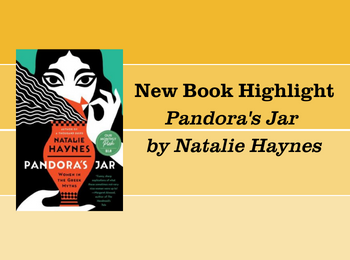
We’ve added Pandora’s Jar: Women in the Greek Myths to our collection.

Perhaps best known for her fictional novel A Thousand Ships, which was a national bestseller, Natalie Haynes has also written and recorded seven series of Natalie Haynes Stands Up for the Classics for the BBC, amongst other books and articles.  Everyone is encouraged to read A Thousand Ships, which is a fantastic retelling of the story of the Trojan War from the point of view of the women involved, including those often forgotten by other writings, but her newest nonfiction book is another must-read.

Natalie Haynes, described as a “broadcaster, writer, and passionate classicist,” by her publisher, has published a new nonfiction book about the Greek myths.  Most people have heard the classic tales of Heracles/Hercules, Zeus, and Achilles, fewer know the stories of Clytemnestra, Jocasta, Antigone, Medea, and even Hera, Aphrodite, and Athena.  The simple reason is that most of the books written about these tales come from stories first told thousands of years ago, which focused on the male heroes in the stories, bypassing the powerful women who are also part of the mythos.  Haynes tries to correct this in her fictional novel A Thousand Ships about the Trojan War, but now broadens her reach beyond that saga, including four total: the Trojan War, the Royal House of Thebes, Jason and the Argonauts, and Heracles, but gives the women of these myths a powerful voice so the reader can learn about all the people involved.  Often overlooked, this feminist retelling is an important discussion (and correction) about women in classical myths, whose stories are just as interesting as the “heroes” of these sagas.

This book is a refreshing take for anyone who has learned about Greek mythology in school, read the books, and seen the movies, and wants a new look at the same tales.  Described as a comedian as well as a writer, Natalie Haynes’s work is a fun read, interesting to even those who shy away from nonfiction.

Recommendations for other books and movies about Greek mythology:

Books: Circe by Madeline Miller ; Mythos: the Greek Myths Reimagined by Stephen Fry ; The Song of Achilles by Madeline Miller  ; The Lightning Thief (Percy Jackson & the Olympians, book 1) for YA fans ; Lore Olympus by Rachel Smythe (for graphic novel fans)

Movies: Clash of the Titans (the original); Jason and the Argonauts ; Wonder Woman ; Troy

home Uncategorized Make Your Research Open

Make Your Research Open

At MU Libraries, we’re committed to making access to research more sustainable, affordable and open. And we need your help!

In traditional publishing models, scholars surrender their copyright to commercial publishers in order to disseminate their research findings in scholarly journals. Publishers then sell or rent that same content back to the institution through journal subscriptions—at ever increasing prices. This unsustainable practice costs institutions millions of dollars every year and creates barriers to access for many. Open access publishing encourages scholars to retain their rights and make their work freely available online, increasing the availability and impact of research.  

What You Can Do:  

Retain Your Rights: No matter where you publish, the single most important thing you can do to make scholarly publishing more sustainable and equitable is Retain Your Rights. It’s your copyright – don’t just sign it away! Contracts are often negotiable. And read those agreements: you may have more rights to share your research than you realize.  

Know Your Options: Choose the right venue for your research and know your open access options. If you’re an editor or manuscript reviewer, ask about the journal’s OA options. 

Share Your Work: Deposit your research in MOspace, MU’s Digital Institutional Repository. Submitting your work to MOspace is easy. Just log in with your SSO and complete the Creative Commons license.

Learn More: Talk with your Subject Specialist about open access in your area or request a Zoom workshop for your department, team or lab. 

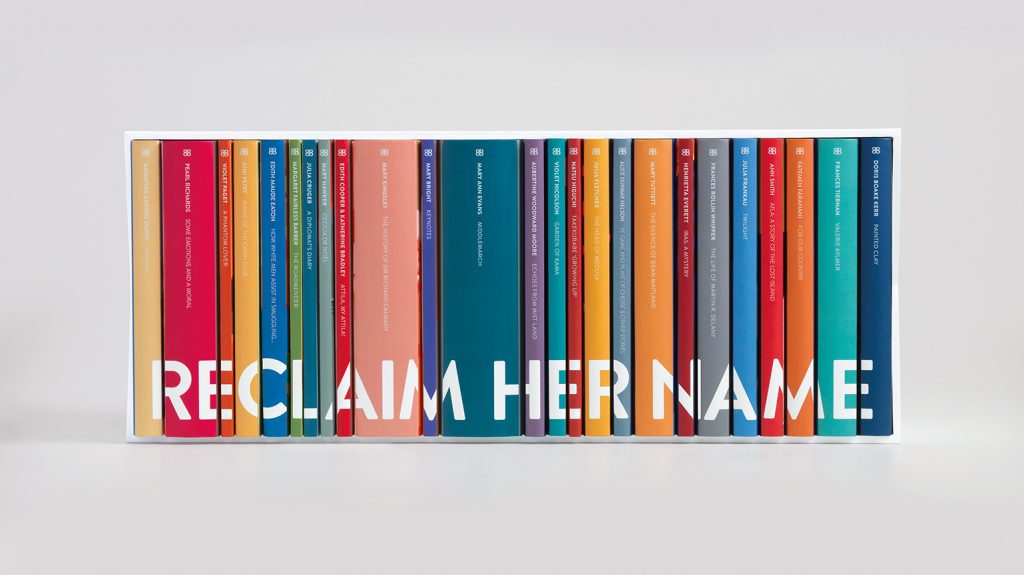
home Resources and Services, Uncategorized “Reclaim Her Name” Leaves Female Authors’ Pseudonyms in the Past

“Reclaim Her Name” Leaves Female Authors’ Pseudonyms in the Past

The Women’s Prize for Fiction, one of the U.K.’s most prestigious writing awards, began in an unusual way. In 1991, though 60% of novels that year had been written by women, all six shortlisted books were by men. Novelist Kate Mosse founded the Women’s Prize (also known as the Orange Prize for Fiction and the Bailys Women’s Prize in past years) 25 years ago to celebrate female authors. The $30,000 prize has been awarded to many incredible writers, such as Madeline Miller for The Song of Achilles (a personal favorite), Tea Obreht for The Tiger’s Wife and Barbara Kingsolver for The Lacuna. The most recent award was given in 2019 to Tayari Jones for An American Marriage, and voting is open for the 2020 prize and the winner will be announced September 9th.

The Women’s Prize has taken on a new project that is incredibly important in our current times. The “Reclaim Her Name” project brings to light female authors who, for one reason or another, were forced to write their works under a male pseudonym. More than 3,000 pseudonymous authors were considered by a group of researchers. In the past, women often wrote under a male pseudonym because female authors couldn’t get published, the content was considered too risque for women, or one of a hundred other reasons. However, this is not a problem confined to the past. There are currently authors using pseudonyms because they would be ostracized or punished by family or the state. This project allows women authors of the past to become visible for who they were, and to illustrate to people today that not all the authors of the past were male, with a female writer here and there. The most recent addition is a well-known book: Middlemarch by George Eliot. Eliot was the pseudonym of Mary Ann Evans, who took the pen name “have observed that a nom de plume secures all the advantages without the disagreeables of reputation,” with her partner, George Lewes, adding, “the object of anonymity was to get the book judged on its own merits, and not prejudged as the work of a woman, or of a particular woman.” Mary Ann Evans will now have her name on the cover of Middlemarch for the first time in history, and this book, considered by many to be one of the greatest novels of all time, will finally have the credit given to its real author.

To promote the “Reclaim Her Name” project, Bailey’s, the sponsor of the project, is re-releasing these books for free.  They are available for download here: https://www.baileys.com/en-gb/reclaim-her-name/all, and many of the books are available through MOBIUS if you’d like a paper copy. Middlemarch is available at Ellis Library, call number PR4662 .A1 1910.

For more information on the project, check out “George Eliot joins 24 female authors making debuts under their real names” and check out the previous winners of the prize: Previous Winners.

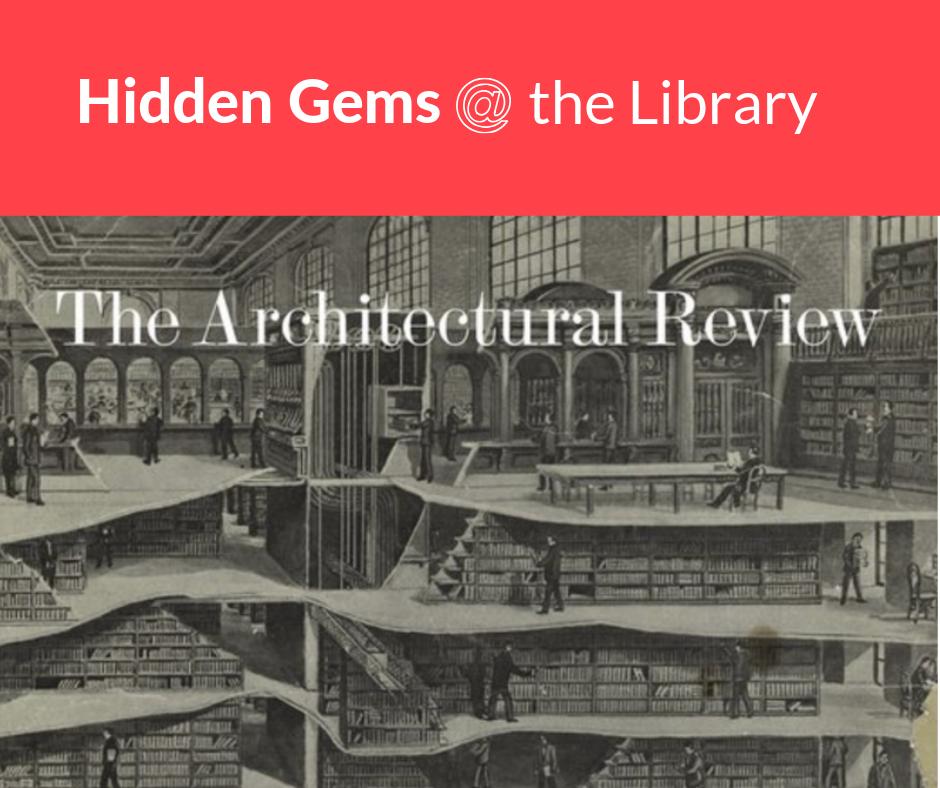
home Uncategorized Hidden Gems @ the Library: The Architectural Review

Hidden Gems @ the Library: The Architectural Review

The Architectural Review is “a curated selection of the best architectural ideas in the world to inspire your mind and feed your soul,” as described on their website.  This magazine is a monthly international architectural magazine, which has been published in London since 1896.  It features a collection of significant buildings from around the world, accompanied by critiques, photography, drawings, and technical details.  The Architectural Review also includes commentary that focuses on the history of the buildings, the social impact, and the reasons why certain choices were made.

MU Ellis Library has been collecting the magazine since 1896.  Online access is available for issues after 5/1/1993 and can be accessed here: https://bit.ly/2UIkIWp.  Paper copies are available from 1896-present.  To view the records, please click here: http://merlin.lib.umsystem.edu/record=b1878198.

The December 2018/January 2019 naturally caught our eye because it is the library issue, which features books and buildings, “with pieces exploring the architecture and influence of books as well as libraries and archives from across the world, including the winner of the AR Library awards.”

Their digital content is updated daily and can be viewed at https://www.architectural-review.com/.

home Uncategorized Two Student Employees Help Preserve Ellis Library’s Collection

Two Student Employees Help Preserve Ellis Library’s Collection

Behind the scenes at the University Libraries, there are quite a few things that go into making a book shelf-ready. Occasionally, the physical processing department, in the ground floor of Ellis Library, has to repair books before they can go on (or back on) the shelves for users to check out.

Thankfully, physical processing is staffed with employees who want to teach, and great students who are eager to learn. The physical processing staff is now able to hand more and more work over to dedicated students, giving the students great experience, and freeing up the employees for other projects, such as conservation and preservation.

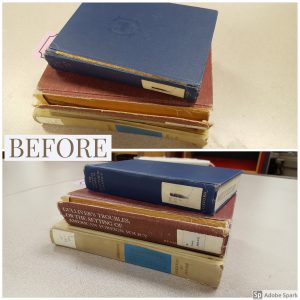
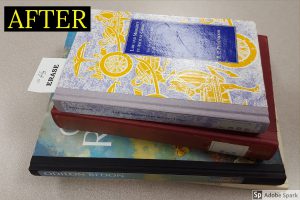
Two such students are Lydia Dysart and Megan Potter, both student employees in the physical processing department. As you can see from the “before” photo, books often come to physical processing looking . . . less than great. But as you see from the “after” photo, a lot can be done to fix a book. From start to finish, these students were able to complete the project.

When a book is in poor shape, you can’t simply glue it back together. The books that are repaired rarely look like they have been repaired (see the “after” photo) thanks to detailed work. When walking around the physical processing work space, you will see streamers hanging from the wall in all different shades.  This is paper used to repair the books, and they want the repair to match the book as closely as possible. It’s intricate work that takes training and detail-oriented people. Thankfully, both Lydia and Megan were up to the task.

As you can see in the before and after pictures, the students have to fix breaks in the book block using rice paper. Then they replace the spine, and, lastly, consolidate and repair the covers. Lydia and Megan did all the spine and cover repairs in the finished repair pictures.

We all appreciate the students who work at University Libraries, and are happy to be able shine a spotlight on some great work!  Thank you, Lydia and Megan, for helping to preserve our library’s collection!