home Resources and Services, Uncategorized Spotlight on Serials: American Craft

Spotlight on Serials: American Craft

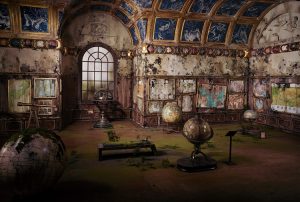
An overgrown library

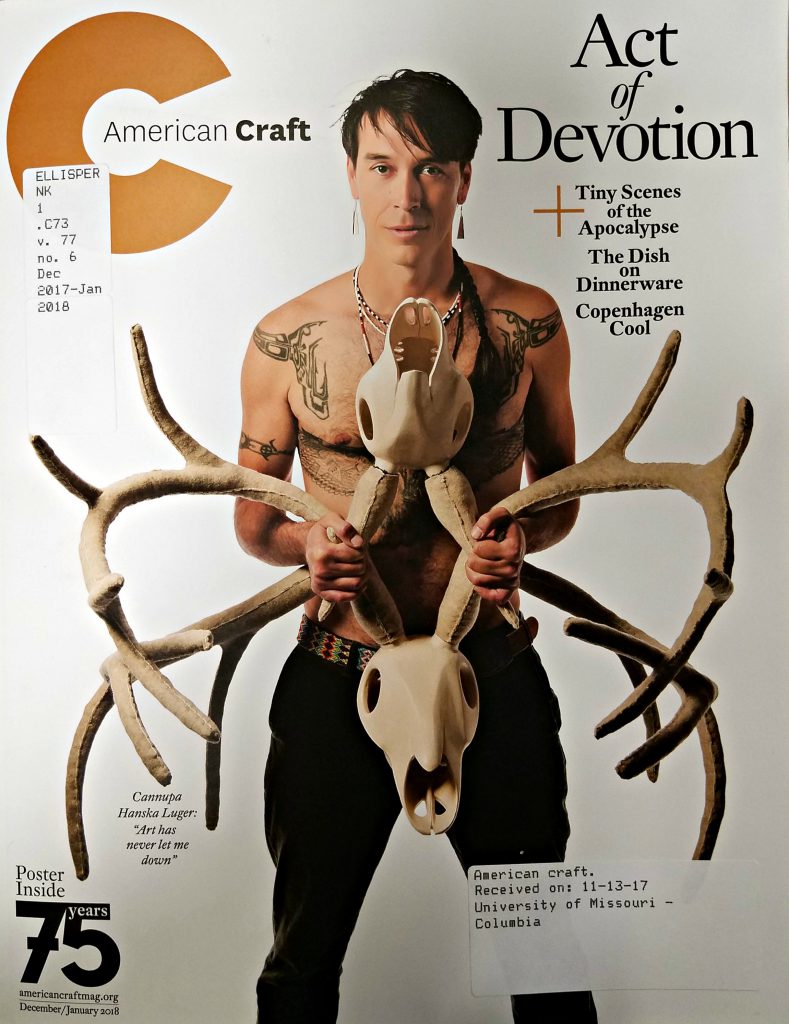
Though many magazines have gone completely digital, Ellis Library is still home to a large variety of print editions – several of them are probably so obscure you haven’t heard of them, but they’re full of information you wouldn’t normally come across anywhere else.

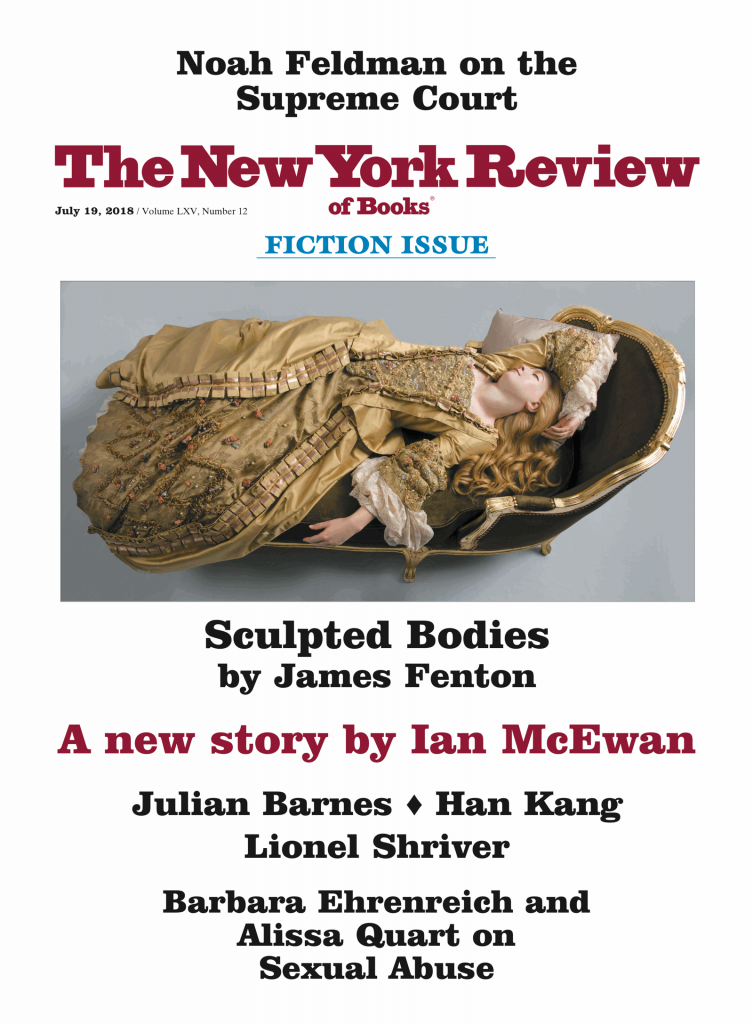
Take, for example, December/January 2018 edition of American Craft.  Erin Powell of our Serials Department couldn’t resist flipping through it when she saw this headline on the cover: “Tiny Scenes of the Apocalypse.”

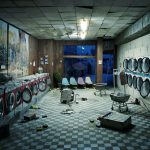
Who remembers making a diorama in grade school?  It’s a common enough project, but Lori Nix and Kathleen Gerber have taken it to new heights (or lows, considering the size of their art) by expanding on the diorama with increasingly complex themes and textures.  While Nix and Gerber didn’t study miniature design in college, their combined skills in photography, ceramics, and glass made them perfect partners for creating realistic scenes of disaster and dystopian realism.  They’ve gradually moved from store-bought props and empty backgrounds to making nearly every element by hand.  Every diorama is extremely detailed and filled with various textures and designs because, as Nix explains, “I don’t know what the camera is going to catch.”  Seeing this kind of in-depth art can make you feel a little out of sorts when viewing the photos, as you can’t easily tell which photos portray real life, and which have been created in a studio.  Nix actually ran into this problem last summer, when she photographed a grasshopper while visiting her mother here in Missouri.  After posting the photo to Instagram, her followers immediately thought it was a model.

An abandoned laundomat at night.

Most of their dioramas portray a “post-apocalyptic background,” as part of their ongoing series, The City, which debuted in 2005.  Nix and Gerber both have a morbid streak, and their next exhibit, premiering at the end of November, takes the dystopian scenes from indoors to outdoors – from an overgrown library to a vast view of a city skyline.  The dioramas are so detailed, the artists are only able to exhibit once every three years or so, but have been able to create their own commercial business, producing dioramas for companies like BBC America and Wired.

While people find a “dark humor” in the works, Nix worries that they “should be doing Utopian scenes” but admits, “it’s not in me.”  She asks Gerber, “Do you think we should be making ‘pretty’?  Could we even make ‘pretty’?”  But neither of them know – they just know this is the art they need to make now.

http://www.nixgerberstudio.com/

http://americancraftmag.org

Imagine handcrafting each map on the wall!

Save

home Resources and Services, Uncategorized Exciting new non-fiction – “Hunger: A memoir of (my) body” by Roxane Gay

Exciting new non-fiction – “Hunger: A memoir of (my) body” by Roxane Gay

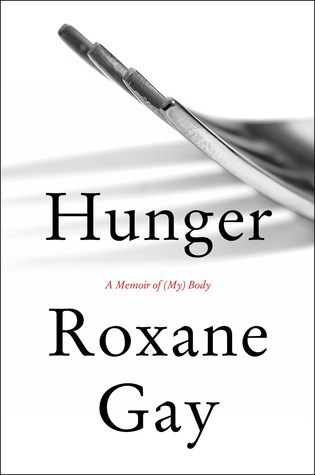
Roxane Gay’s memoir Hunger is available for checkout through the University Libraries.

Is there anything Roxane Gay can’t do??  Let’s just list some of the highlights of this amazing woman:

Click the cover for more information!

You wonder how a woman like that has time to do all of this and still travel around the country, promoting her new book, Hunger: A memoir of (my) body.  Gay has been open about her life and experiences, and in her new book, she tackles a subject she has often written about intimately on her tumblr blog.  Her horrific sexual assault at age 12 has been a big influence on her work over the years, and this part of her past is discussed in this book, with regards to self-image and self-care: “I ate and ate and ate in the hopes that if I made myself big, my body would be safe. I buried the girl I was because she ran into all kinds of trouble. I tried to erase every memory of her, but she is still there, somewhere. . . . I was trapped in my body, one that I barely recognized or understood, but at least I was safe.”  People make assumptions and are often cruel towards people of a certain weight, but more than that, Gay confronts the reality of being a fat person in today’s society, for example: unsolicited advice from strangers (many listed on her blog with a link below), people taking food out of her grocery cart, and the heartbreaking realization that “the bigger you become, the smaller your world gets” with regards to movie theaters and airplane seats, and being excluded in so many ways. Gay’s honesty and vulnerability make this a memoir worth checking out.


Interesting Links:

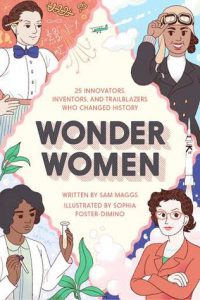
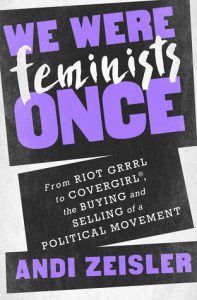
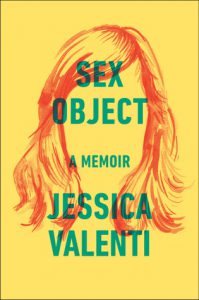
Here are recommendations for books that you may also enjoy – available through University Libraries!  Click the covers for more information!

Bad Feminist by Roxane Gay
Wonder Women: 25 innovators, inventors, and trailblazers who changed history by Sam Maggs and Sophia Foster-Domino


We were feminists once: From riot grrrl to CoverGirl®, the buying and selling of a political movement” by Andi Zeisler
Sex Object by Jessica Valenti

Save

Save

Save

home Uncategorized Spotlight on new fiction: The Wonder, by Emma Donoghue

Spotlight on new fiction: The Wonder, by Emma Donoghue

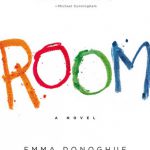
Click for more information on Room!

Emma Donoghue is a writer who is best known for her book, “Room,” which was made in to a movie in 2016.  It won multiple awards, including being nominated for a Best Movie oscar, which is likely due to both the acting and the fact that Donoghue herself adapted the book into a screenplay.  While many consider it blasphemous to say that “the movie is better than the book,” I will say that both the book and the movie are excellent, and worth checking out (Room is available at Ellis Library, and the movie through MOBIUS).


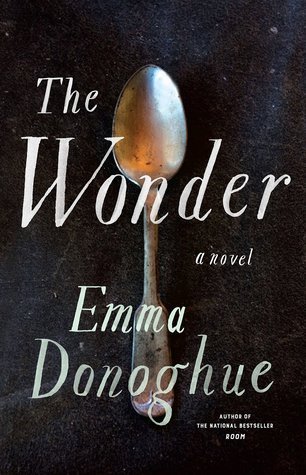
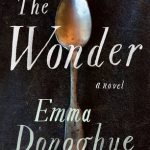
Click for more information on The Wonder!

Ellis Library now has a copy of Donoghue’s new book, titled The Wonder.  Lib Wright, a nurse mentored by Florence Nightingale, is sent to a small Irish village to investigate the “wee wonder” living there, Anna O’Donnell, who is allegedly living on “manna from heaven.”  Visitors are flocking to the house to witness this miracle of a child who has had nothing but spoonfuls of water for four months.  Libby, along with another nurse, are tasked with watching Anna to make sure she isn’t sneaking food in somehow, but as Anna’s conditions worsens, Libby finds it harder and harder to be an objective observer and begins to question her own beliefs.


Save

Save

Save

Save