Watch Out for Fake Citations from ChatGPT

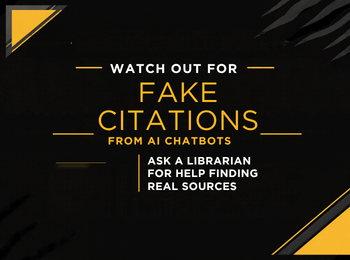
ChatGPT, one of the most popular artificial intelligence (AI) chatbots, uses a language model to respond to questions and compose various written content. Many college students use ChatGPT to help them complete assignments. While there are times when this can be helpful, it has limitations as a reliable research assistant. One thing you need to watch out for is that ChatGPT will sometimes “hallucinate” (fabricate) citations. The citations may sound legitimate and scholarly, but they are not real. If you try to find these sources through Google or the library, you will search in vain.

If you need help finding resources on a topic, just Ask a Librarian to help you find real resources so you can be successful on your next assignment!

Build Your Research Identity with ORCID

Your research is important and we want to help you ensure it is making an impact. ORCID is a great way to start increasing your research impact with minimal effort.

What is ORCID?

An ORCID is a permanent unique identifier for researchers. Using your ORCID is more accurate and secure than a name: many people can have the same name but each ORCID is unique. They protect your unique scholarly identity and help you keep your publication record up-to-date with very little effort.

Why should you get an ORCID?

ORCID’s are permanent and will follow you throughout your entire career.

ORCID is increasingly used by individuals (e.g. as a signature in emails) and systems (e.g. in Scopus, PubMed), enabling recognition and discoverability.

ORCID automatically updates your profile from other systems – saving you time.

ORCID is unique to you.

How to get an ORCID ID?

Here is a detailed explanation of how to get your ORCID started. Reach out to the library for help!

home Gateway Carousel, J. Otto Lottes Health Sciences Library, Resources and Services Increase Your Scholarly Impact: Use the SPARC Author Addendum

Increase Your Scholarly Impact: Use the SPARC Author Addendum

Your article was recently accepted for publication and you want to make sure your research has the widest reach and impact. One way to make sure this happens is retaining your author rights.

Traditional publishing agreements sign your copyright away to the publisher, lessening your impact as an author. When you don’t hold your copyright, you might not be allowed to give copies to your class or distribute it among colleagues. And depending on what you sign, you aren’t allowed to put your article on your webpage or in an online depository, further limiting your exposure.

So how do you make sure you retain your copyright? Publishing agreements are negotiable. Know your rights and consider using the SPARC author addendum* to modify your agreement. The SPARC author addendum is a free and legal resource that helps you easily modify your publishing agreement.

Need help or have questions? Visit our know your rights guide or contact your subject librarian.

*The Author Addendum is a free resource developed by SPARC in partnership with Creative Commons, established non-profit organizations that offer a range of copyright options for many different creative endeavors.

Make Your Research Open

At Mizzou Libraries, we’re committed to making access to research more sustainable, affordable and open. And we need your help!

In traditional publishing models, scholars surrender their copyright to commercial publishers in order to disseminate their research findings in scholarly journals. Publishers then sell or rent that same content back to the institution through journal subscriptions—at ever increasing prices. This unsustainable practice costs institutions millions of dollars every year and creates barriers to access for many. Open access publishing encourages scholars to retain their rights and make their work freely available online, increasing the availability and impact of research.  

What You Can Do:  

Retain Your Rights: No matter where you publish, the single most important thing you can do to make scholarly publishing more sustainable and equitable is Retain Your Rights. It’s your copyright – don’t just sign it away! Contracts are often negotiable. And read those agreements: you may have more rights to share your research than you realize.  

Know Your Options: Choose the right venue for your research and know your open access options. If you’re an editor or manuscript reviewer, ask about the journal’s OA options. 

Share Your Work: Deposit your research in MOspace, MU’s Digital Institutional Repository. Submitting your work to MOspace is easy. Just log in with your SSO and complete the Creative Commons license.

Learn More: Talk with your Subject Specialist about open access in your area or request a Zoom workshop for your department, team or lab. 

home Gateway Carousel, J. Otto Lottes Health Sciences Library, Resources and Services Publish Open Access for Free With Read & Publish Agreements

Publish Open Access for Free With Read & Publish Agreements

Publishing open access is a great way to keep research open and retain your copyright. We do understand that publishing open access comes with a financial commitment that you wouldn’t necessarily have with traditional publishing.

To help offset costs, Mizzou Libraries has agreements with several publishers that offer discounts and support of article processing charges (APCs) for the following journals.

Want to learn more? Talk with your subject librarian about open access in your area.

home Ellis Library, Resources and Services Peer Navigator Corner: Before the Walls Went Up

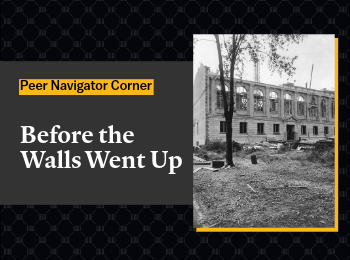
Peer Navigator Corner: Before the Walls Went Up

The Grand Reading Room – Then and Now
Written by: Ben Atterberry

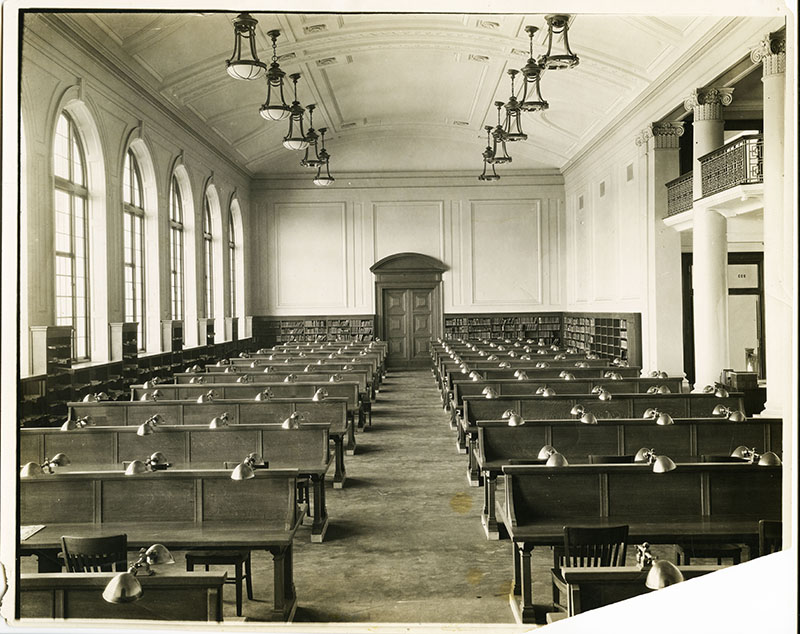
The next time you study in Ellis Library’s Reading Room, take a moment to look around. The room may feel familiar, but it looked strikingly different when Ellis Library opened in 1915: unfinished, dimly lit, and open on one side to the rest of the building. According to the University Libraries’ Ellis Old and New page, the room was not finished when the library opened. A 1914 photograph shows it still being put together, with light fixtures on one side lacking the glass globes found on fixtures elsewhere in the room. The coffered ceiling was left plain white at the time, and it stayed that way until the room was freshened up in 2003 – nearly 90 years after the room first opened the ceiling and wall details were finally painted. 

The room was also initially more open to the rest of the library. In a 1915 photograph looking south, no partition separates the room from the hallway; students at the tables could see straight past the columns into what used to be the Delivery Room, where a card catalog was used to request and pick up books. That sightline doesn’t exist anymore. A partition now closes off the gap between the columns, though the archive doesn’t specify exactly when it went up. The old Delivery Room itself was turned into Room 213, a space built in the late 1990s that now houses the library’s Electronic Classroom. At the time, that was the extent of the second floor – there were no east stacks, and the connecting reading room where the cast gallery is now didn’t exist. 

In 1936 a second, connected reading room (now room 202) was added to the Grand Reading Room almost doubling the size of the space. The room’s purpose shifted over the decades: the architect’s 1936 plan shows a desk near the West Stacks doors where books could be requested, and by 1955 the room served as the Reserved Book Reading Room. These changes are easy to miss on a normal walk through the library. To help visitors explore Ellis Library’s past and present, University Libraries maintain a Now and Then Photographs guide, pairing historical images with photos of the same spots today. So, on your next study session, picture the room as it looked in 1915: unfinished, partly lit, and open to the hallway. The quiet space students know now took decades to take shape and included one very delayed paint job. 

Explore more: 

home Resources and Services 2026 Reading Challenge: September Recap and October Preview

2026 Reading Challenge: September Recap and October Preview

In September, we challenged you to read Any Book from the Columbia Public Library One Read List . Our September winner is Kori Martiny who won their choice of a mizzou or a bookish prize.  To be eligible for the prize drawing, make sure to read a book that fits the month’s theme and then tell us about it.

We are excited to see all the banned books you choose to read in October. Need some suggestions? Dr. Sam Cohen, Associate Professor in the Department of English and author of Banning Books in American- Not a How-to created a list of banned books recommendations.

You can view the list at this link: https://libraryguides.missouri.edu/c.php?g=1537064&p=11522812#s-lg-box-wrapper-42592176


Congratulations to everyone who participated in the September reading challenge. Here are some of the titles you read last month:

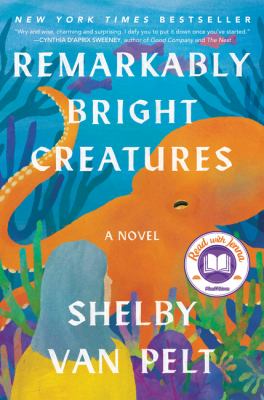
Remarkably Bright Creatures

“I absolutely loved this book! Such a unique story to tell through the eyes of an octopus. Connecting the two main characters through medial tasks was so fun to following along with and see how the story plays out. A great story about heartbreak, finding yourself, and realizing animals are brighter than we think they are!” – Zoe


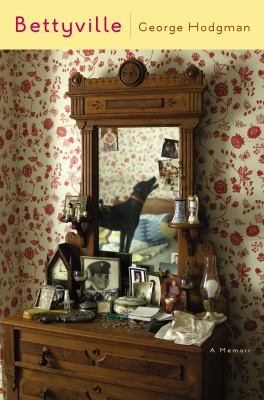
Bettyville

“This book was so good. The author grew up in a town 20 minutes away from where I grew up and live in, he even mentioned my city a few times. Not only that, he also went to Mizzou! It was so interesting to see someone talk about the area I know so well. The people he described are people that while I don’t personally know, I know people exactly like them. The way Hodgman talked about his relationship with his family, and especially his mother was so real and sad and beautiful. I definitely recommend this book.” -Addison


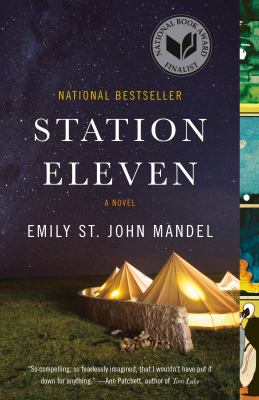
Station Eleven

“This was such an interesting read and not at all what I expected when I first picked up this novel. I expected the typical post-apocalyptic world of survival but did not expect the tales of hope. I especially loved the aspect of keeping the arts alive even in the midst of terrible suffering. One of the lines that sticks with me is about survival alone being insufficient.” – Amanda


You can see more of the books read in September at this link: https://libraryguides.missouri.edu/c.php?g=1537064&p=11695410#s-lg-box-wrapper-43181947

TAGS:

Taira Meadowcroft

Taira Meadowcroft is the Public Health and Community Engagement Librarian at the Health Sciences Library at the University of Missouri.

home Gateway Carousel, Resources and Services Lean Library Allows You to Access Mizzou Libraries—Anywhere, Anytime

Lean Library Allows You to Access Mizzou Libraries—Anywhere, Anytime

Lean Library is a free browser extension available to all current Mizzou students, faculty and staff. Whether starting your research on Google Scholar, a publisher’s site, or anywhere else online, Lean Library helps you seamlessly connect to library resources when you’re off campus or not on Tiger WiFi.

Here’s how it works:

  • Automatically checks if Mizzou Libraries has access to the article or book you’re viewing.
  • Provides direct links to full-text content when available.
  • Prompts you to log in using MU’s Single Sign-On (SSO)—just like email or Canvas.

4 simple steps to get started

Step 1: Go to Lean Library Extension
Step 2: Install the extension
Step 3: Select the University of Missouri, Columbia
Step 4: Search for articles and journals, and enjoy quick access to all library resources


Need something we don’t have?

Lean Library makes it easy to request articles and books through our Interlibrary Loan (ILL) service—at no cost to you.

For more information, visit our Lean Library guide.

home Ellis Library, Resources and Services Peer Navigator Corner: Who Do I Ask?

Peer Navigator Corner: Who Do I Ask?

Written by: Mekenzie Moffet

Ellis Library isn’t just books – there are many people who can help you, but it can sometimes be confusing to know who to ask. Below is a quick guide to finding the right person!

Peer Navigators

Peer Navigators are a great place to start because we can point you in the right direction—even if that’s another person who can fully answer your question. We can help you find locations throughout the library and assist with basic technology tasks, such as:

  • Directions both inside the library or across campus
  • Fixing common printer problems
  • Downloading the printer software so you can print from your own computer
  • Finding scanners, computers, study spaces, and other library resources
  • Searching the catalog for books and where to find the call number

Circulation Desk

The North and West service desks, also called the Circulation Desk, can help you:

  • Find and check out books
  • Return or renew library materials
  • Ask questions about your library account
  • Checking out equipment like phone chargers, video cameras, or self care and sensory kits

Subject Librarians

Subject librarians are your go-to people for research help. They specialize in different academic subjects and can help you:

  • Find reliable sources for assignments
  • Navigate library databases and tech tools like research AI
  • Develop or narrow down a research topic and create better search terms
  • Find materials related to your major or class
  • Find specialty information like legal policy, data, or statistics

Writing Center

The Writing Center, located in Ellis Library Room 115, can help during any stage of the writing process. You do not need to have a complete draft before making an appointment! They can help with:

  • Brainstorming and organizing ideas
  • Developing a thesis
  • Revising drafts
  • Improving citations
  • Working through writer’s block

Digital Media and Innovation Lab

The Digital Media and Innovation Lab can help with creative and media-based projects. This may include:

  • Recording or editing audio and video
  • Using media equipment and software
  • Working on podcasts, presentations, or other digital projects
  • Learning how to use unfamiliar creative technology

IT Help

For more complicated problems, such as your computer crashing or other high-tech issues, you will need help from IT. Divisions of IT staff are sometimes available at the desk on the first floor next to printer station 3A–D, which is surrounded by “Help Station” posters.

  • Bring anything technological to them

If you are ever unsure about who to ask, don’t be afraid to start with a Peer Navigator. Even if we cannot solve the entire problem ourselves, we can help you find the person who can!
home Gateway Carousel, Resources and Services Book a Librarian for Research Help

Book a Librarian for Research Help

Whether you are starting your first research project or have written a dozen articles, you can benefit from a consultation with a librarian. It’s free and you can book online in advance according to your schedule.

Librarians can meet with you virtually or in-person.

MU Students can use Canvas to schedule an appointment via MU Connect* and meet with the librarian assigned to your class. Students, if you book a research consultation with a librarian, you can earn a point towards your S.T.A.R. recognition.

MU Faculty and Staff can fill out the form to schedule an appointment.

*What is MU Connect, and how do you use it? Watch this short video to find out and make an appointment today.