home Gateway Carousel HSL, Resources and Services Overview of Recent University of Missouri Publications in Medicine and Related Fields: February 2025

Overview of Recent University of Missouri Publications in Medicine and Related Fields: February 2025

Each month we provide an overview of University of Missouri School of Medicine faculty-authored articles in medicine and related fields as well as a featured article with the highest journal impact factor.

This month’s featured article, “Transport and Immune Functions of the Lymphatic System” was co-authored by Dr. Michael J. Davis and Dr. Scott Zawieja of the Department of Medical Pharmacology and Physiology. The article was published in Annual Review of Physiology (journal impact factor of 15.8 in 2023).

Note that Dr. James Stevermer also had a publication in JAMA as a member of the USPSTF: “Screening for Osteoporosis to Prevent Fractures: US Preventive Services Task Force Recommendation Statement

See the list of publications in medicine and related fields we retrieved for this month: https://library.muhealth.org/facpubmonthlyresult/?Month=February&Year=2025

How To Create a Data Management Plan

More and more, grants are requiring a data management plan in order to meet their funder requirements. A good data management plan will also help you manage your data and help others use your data if shared.

A good resource available to you at the university is the DMP Tool. This tool provides templates for Data Management and Sharing Plans that comply with NIH and other funder requirements. You can access the tool with your Mizzou email address, enabling you to share your plans with a data librarian for review and access templates containing language specific to Mizzou’s resources.  

Not sure where to start? Schedule a Data Management and Sharing Consultation with a librarian.

If you have a data management and sharing plan already, you can submit your Data Management and Sharing Plan for a Data Librarian to review 

TAGS:

Taira Meadowcroft

Taira Meadowcroft is the Public Health and Community Engagement Librarian at the Health Sciences Library at the University of Missouri.

home J. Otto Lottes Health Sciences Library, Resources and Services New MU Authored Trending Article in PubMed

New MU Authored Trending Article in PubMed

A recently trending article in PubMed was From conventional to cutting edge: an exploration of osteosarcoma treatments co-authored by Trenton Mayberry and Dr. Yujiang Fang from the Department of Surgey at the School of Medicine.

What is a PubMed trending article?

Trending articles is a marker of increased interest in a PubMed abstract. Trending articles are those with a significant increase in daily PubMed views in the past two days as compared to the previous baseline period, which is approximately a week.

You can see the full list of trending articles here.

Interested in tracking the impact of your articles after they are published? Email asklibrary@health.missouri.edu to learn how we can help.

TAGS:

Taira Meadowcroft

Taira Meadowcroft is the Public Health and Community Engagement Librarian at the Health Sciences Library at the University of Missouri.

home J. Otto Lottes Health Sciences Library, Resources and Services Publish for Free in Cambridge University Press

Publish for Free in Cambridge University Press

In the spring of 2024, the MU Libraries announced a transformational “Read & Publish” agreement with Cambridge University Press.

This agreement greatly expanded MU’s electronic access to Cambridge journals (the “Read”), and it waived Article Processing Charges (APCs) to make your work Open Access (the “Publish”).

The initial agreement allowed for waiving 10 APCs. We are pleased to announce that in 2025, the MU Libraires we will to fund an uncapped number of APCs.

In order to qualify for a waiver, the MU author must be one of the corresponding authors. The original research can be published in any Cambridge journal that is designated as Gold OA, Hybrid OA or Research Open.

Read more about the MU Read & Publish agreement with Cambridge University Press. See which journals are eligible by using the eligibility checker tool.

Questions? Contact your Subject Librarian.

Where To Store Your Data

Finding where to store your data can difficult. Our data services librarian has curated a robust list of data repositories based on discipline.

This extensive list includes:

  • A description of each repository
  • any costs associated with storing the data
  • submission information
  • who has access to the data

But how will know what repository is best for you? Consider the following:

  1. Depending on your funding and the data that your project generates, you may be required to deposit your data in a specific repository. If this is the case, your funding agency/institution will explicitly state where you must store your data.
  2. Otherwise, if there is a repository that is commonly used within your discipline, you should store your data there. A great way to locate these repositories is by consulting mentors on where they have stored project data in the past.
  3. In the absence of a funder-mandated or a discipline-specific repository, you should store your data in either a generalist or an institutional repository.

If you’d like to discuss the best place to store your data, connect with our data services librarian.

TAGS:

Taira Meadowcroft

Taira Meadowcroft is the Public Health and Community Engagement Librarian at the Health Sciences Library at the University of Missouri.

home J. Otto Lottes Health Sciences Library, Resources and Services Overview of Recent University of Missouri Publications in Medicine and Related Fields: January 2025

Overview of Recent University of Missouri Publications in Medicine and Related Fields: January 2025

Each month we provide an overview of University of Missouri School of Medicine faculty-authored articles in medicine and related fields as well as a featured article with the highest journal impact factor.

This month’s featured article, “Intra-arterial tenecteplase after successful endovascular recanalisation in patients with acute posterior circulation arterial occlusion (ATTENTION-IA): multicentre randomised controlled trial” was co-authored by Dr. Adnan Qureshi of the Department of Neurology. The article was published in BMJ (impact factor of 93.7 in 2023).

See the list of publications in medicine and related fields we retrieved for this month: https://library.muhealth.org/facpubmonthlyresult/?Month=January&Year=2025

home J. Otto Lottes Health Sciences Library, Resources and Services New Ebooks at Mizzou Libraries: Medicine and Health Sciences

New Ebooks at Mizzou Libraries: Medicine and Health Sciences

Below are a few of the medicine and health sciences ebooks we’ve recently added to our online collection. You can see the rest of our new ebooks here.

These ebooks were purchased with student success grant funds awarded by the Office of the Provost.


Emerging Pandemics : Connections with Environment and Climate Change

Pandemics are often associated with viruses and bacteria occurring in wildlife in natural environments. Thus, diseases of epidemic and pandemic scale are mostly zoonotic, some of which include AIDS, Zika virus, severe acute respiratory syndrome (SARS), and COVID-19. The book seeks to explore the documented history of pandemics and various epidemics that have the potential of turning into pandemics with the warming climate, pollution, and environmental destruction.


The International Encyclopedia of Health Communication

The International Encyclopedia of Health Communication presents a thorough overview of a dynamic field, bringing together entries by an international panel of contributors that address a comprehensive range of recent and emerging topics. With a global and interdisciplinary focus, this timely resource addresses cutting-edge digital technology, complementary and integrative healthcare, diversity and inclusion, health equity, COVID-19, and much more.


Artificial Intelligence for Neurological Disorders

The book discusses many machine learning techniques to detect neurological diseases at the cellular level, as well as other applications such as image segmentation, classification and image indexing, neural networks and image processing methods. Chapters include AI techniques for the early detection of neurological disease and deep learning applications using brain imaging methods like EEG, MEG, fMRI, fNIRS and PET for seizure prediction or neuromuscular rehabilitation.


The Hospice Heritage

Through The Hospice Heritage: Celebrating Our Future, physicians, nurses, social workers, and clergy will find unique examples to give patients the attention, care, and understanding they need at that time in their life. Since 80 percent of people who die do so without the support of a hospice program, this important book offers approaches designed to expand access to hospice and provide a solid foundation of treatment for patients with cancer and non-cancer diagnoses.


Ataxic Disorders

This volume’s primary goal is to provide a comprehensive understanding of recent developments and advancements in the study of ataxic disorders. Beginning with an examination of the cerebellar region, and then progressing to a fresh perspective on the clinical aspects of the various forms of ataxia, this handbook gives clinicians a state-of-the-art reference for the management of the many etiologies and neurological manifestations of ataxic disorders.

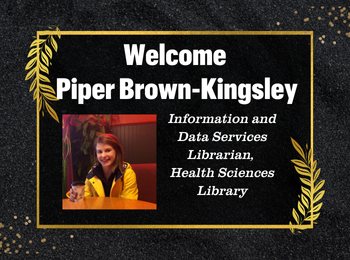
Welcome to Piper Brown-Kingsley

The MU Libraries are pleased to announce the hire of Piper Brown-Kingsley as the Information and Data Services Librarian at the Health Sciences Library. She began over the summer. Piper is a May 2024 graduate of the University of Wisconsin-Madison Information School. In addition, she’s been working as a remote Data Curation Intern at the National Neighborhood Data Archive (NaNDA) at the University of Michigan. We’re so excited to have her join the Information Services Team at the newly renovated Health Sciences Library.

home Ellis Library, J. Otto Lottes Health Sciences Library, Resources and Services Protect Yourself and Your Research from Predatory Journal Publishers

Protect Yourself and Your Research from Predatory Journal Publishers

Predatory publishing doesn’t just take advantage of authors by misrepresenting review, editorial, and fee structures. It also hinders access to the work itself, hurting the overall enterprise of research. The epidemic of predatory journals reached serious enough heights in 2016 that the Federal Trade Commission charged OMICS, one such publisher of hundreds of predatory journals, for its deceptive practices.

“If it sounds too good to be true, it probably is,” says Janice Dysart, Science Librarian and creator of the Where to Publish Your Research guide. “Be wary of these email solicitations from publishers trying to get you to submit articles to their journals.” She recommends using the Think Check Submit checklist to determine whether a publisher is legitimate.

Anyone can fall victim to predatory journal publishers. Jung Ha-Brookshire, Associate Dean for Research and Graduate Studies, College of Human Environmental Sciences, and Associate Professor and Director of Graduate Studies, Textile and Apparel Management, relates her experience after a graduate student recommended a journal a few years ago. She says, “I didn’t think twice about it. We submitted our paper and got accepted without any revisions. Then they were asking us to send money somewhere in Pakistan.” She still didn’t realize what was happening because she hadn’t even heard of “predatory journals.”

That all changed about a year later when she learned of a list of predatory journals from her colleagues. “We found out that our journal was on that list,” she says. They tried to withdraw their work from the publication but couldn’t. Because the journal wasn’t legitimate, the article could only be found via the specific URL and not by searching, so they pulled the publication information from their CVs. Jung says, “We had to take that manuscript as a loss because we couldn’t even take that paper to other publishers since, technically, it is already published.”

After that experience, Jung now checks with her subject librarian, Noël Kopriva, every time she encounters a journal she hasn’t heard of, “no matter how good the website looks.” Jung advises, “Be careful with choosing the right journals. Do not get fooled by address, location, a beautiful website, and a wonderful set of editorial board names. Check with your librarian first when in doubt!”

For more information on how to spot predatory journal publishers, see our Where to Publish Your Research guide or contact your subject librarian

Originally published in 2018 by Jen Gravley, Research and Instruction Librarian

home Events and Exhibits, J. Otto Lottes Health Sciences Library Rare Books at the Health Sciences Library

Rare Books at the Health Sciences Library

Did you know that the Health Sciences Library has a rare book room? The Donald Silver Rare Book Room was donated to the library by the Department of Surgery in honor of Dr. Donald Silver, an emeritus professor. lt is located on the third floor of the Health Sciences Library, directly adjacent to the elevator. Viewing hours of rare books in the collection or of the room itself are available by appointment. Items can be used for research purposes and under limited conditions borrowed or scanned for use with the permission of the Rare Book Librarian or the Director of the Library, Deb Ward.

A “rare” book is considered rare because of the scarcity of item, not because of its dollar value, although at times that can be considerable. Rarity is based on a few factors: that there are few exemplars in existence, that they are primary source materials, that the intellectual content of the materials is significant, or they are old and fragile. Any one or more of those factors establishes that an item is “rare.”

The items in the Rare Book Room at HSL are placed there if they are printed before 1900 or are selected by the Director or HSL Librarians. Criteria for selection can also include considerations such as special examples of binding, fine paper, printing, or because they contain significant illustrations. Some titles are fascimilies, expertly reproduced copies, of important manuscripts and early printed books.

An item is given rare book status and retained in our library if the item affords a needed perspective on contemporary studies, or provides the opportunity to learn about early developments in the field of medicine. Other criteria include providing a historical focus on the patient, the medical environment, or medical institutions. Items, which identify a historical person or trends in medicine, or have a historical background to technological breakthroughs, are also given rare book status. We are particularly interested in collecting items relating to early medicine in Missouri.

Many of the books in our collection were donated by Clarence Martin Jackson, a former graduate of the University of Missouri. He received a B.S. in 1898, an M.S. in 1899, and an MD in 1900, all from Mizzou. He became dean of the Medical school from 1909 to 1913, and spent the rest of his career at the University of Minnesota. Jackson left over 12,000 items from his personal collection to the University of Missouri Libraries, including many of the volumes in the HSL Rare Book Room. Other books in the collection have been donated by many generous supporters over the years, or were originally purchased for the use of students and faculty in the medical and nursing programs.

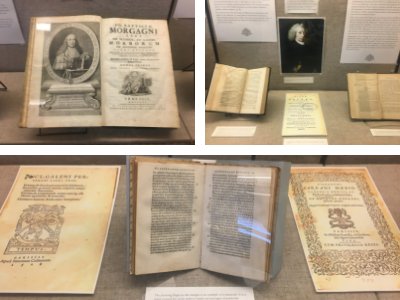
This exhibit highlights some of the important works from our collection.

The works on exhibit are:

  • Samuel Thomas von Sömmerring. Icones embryonum humanorum. Frankfurt: Varrentrapp and Wenner, 1799.
  • Giovanni Battista Morgagni. De Sedibus et Causis Morborum per Anatomen Indagatis. Venice: Ex Typographia Remondiniana, 1761.
  • John Huxham. An essay on fevers, and their various kinds, as depending on different constitutions of the blood: with dissertations on slow nervous fevers; on putrid, pestilential, spotted fevers; on the small-pox; and on pleurisies and peripneumonies. London: S. Austen, 1750.
  • Claudius Galen of Pergamon. Libri tres : Primus, De facultatum naturalium substantia. Secundus, Quod animi mores, corporis temperaturam sequuntur.  Tertius, De propiorum animi cujusque affectuum agnitione & remedio. Paris: Simon Colinaeus, 1528.
  • Florence Nightingale. Notes on nursing. New York: D. Appleton and Company, 1894.
  • Girolamo Cardano. De methodo medendi. Parisiis: Rovillii, 1565.
TAGS:

Taira Meadowcroft

Taira Meadowcroft is the Public Health and Community Engagement Librarian at the Health Sciences Library at the University of Missouri.