Shannon Cary
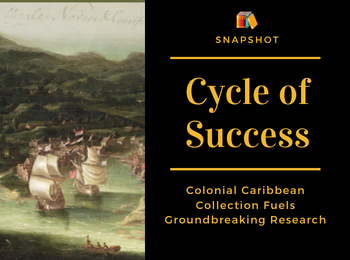
Cycle of Success Spotlight: Mariah Newton’s Spreadsheet Sparks Curriculum Mapping at Zalk Vet Med Library
Have you ever wished for a master list of “those things”—sorted twelve different ways, cross-listed, and checked for duplication? So have we. And thanks to Mariah Newton at the Zalk Veterinary Medical Library, that wish is becoming reality.
Mariah, Library Specialist Sr., recently created a comprehensive spreadsheet mapping the Veterinary Medical Library’s reserve collection. This wasn’t just a list—it was a data-rich tool that captured which textbooks are used in which courses, by which instructors, in what formats, and how frequently. Her work unexpectedly launched a curriculum mapping project, giving the library team a powerful resource to analyze instructional periods, identify overlapping materials, and explore cost-saving opportunities.
This data also opens the door to deeper conversations with faculty and stakeholders about integrating library instruction at key points in the curriculum—ensuring students graduate as information-literate veterinarians. Future additions to the map will include textbook edition updates, faculty assignments, and connections to student organizations like SAVMA and journal clubs.
Daylight Saving Time Ends This Weekend
Daylight saving time ends at 2 a.m. on Sunday, November 2. That means you should move your clocks back one hour on Saturday night before going to bed. It is also recommended that you use this as a reminder to change all batteries in fire alarms and carbon monoxide detectors.
In the News
Kline Wins Missouri Library Association Award

The Missouri Library Association (MLA) has named Jill Kline, student success librarian at the Mizzou Libraries, as the recipient of this year’s Outstanding New Librarian Award. This prestigious recognition celebrates early-career librarians who have made significant contributions to advancing library and information services in Missouri.
Since joining Mizzou two years ago, Jill has made a remarkable impact on student engagement and academic success. Through instructional sessions and campuswide events, she has reached thousands of students, helping them navigate library resources with confidence. Her efforts have led to the development of innovative learning tools and the acquisition of grant funding to support a new well-being book collection.
Jill’s commitment to excellence extends beyond the university. She has presented at regional conferences, including the Missouri Library Association annual conference, and her instructional sessions consistently receive high praise—more than 95% of surveyed students reported they are more likely to use library tools thanks to her guidance.
Her outreach includes leading sessions for middle and high school students and co-developing a new graduate-level library workshop. Jill also serves on university-wide committees focused on first-generation student success and AI literacy, further demonstrating her dedication to inclusive and forward-thinking education.
Congratulations to Jill Kline for her outstanding achievements and for setting a high standard for the future of librarianship in Missouri.
Protect Yourself and Your Research from Predatory Journal Publishers
Predatory publishing doesn’t just take advantage of authors by misrepresenting review, editorial, and fee structures. It also hinders access to the work itself, hurting the overall enterprise of research. The epidemic of predatory journals reached serious enough heights in 2016 that the Federal Trade Commission charged OMICS, one such publisher of hundreds of predatory journals, for its deceptive practices.
“If it sounds too good to be true, it probably is,” says Janice Dysart, Science Librarian and creator of the Where to Publish Your Research guide. “Be wary of these email solicitations from publishers trying to get you to submit articles to their journals.” She recommends using the Think Check Submit checklist to determine whether a publisher is legitimate.
Anyone can fall victim to predatory journal publishers. Jung Ha-Brookshire, professor and department chair for the Department of Textile and Apparel Management, relates her experience after a graduate student recommended a journal a few years ago. She says, “I didn’t think twice about it. We submitted our paper and got accepted without any revisions. Then they were asking us to send money somewhere in Pakistan.” She still didn’t realize what was happening because she hadn’t even heard of “predatory journals.”
That all changed about a year later when she learned of a list of predatory journals from her colleagues. “We found out that our journal was on that list,” she says. They tried to withdraw their work from the publication but couldn’t. Because the journal wasn’t legitimate, the article could only be found via the specific URL and not by searching, so they pulled the publication information from their CVs. Jung says, “We had to take that manuscript as a loss because we couldn’t even take that paper to other publishers since, technically, it is already published.”
After that experience, Jung now checks with her subject librarian, Gwen Gray, every time she encounters a journal she hasn’t heard of, “no matter how good the website looks.” Jung advises, “Be careful with choosing the right journals. Do not get fooled by address, location, a beautiful website, and a wonderful set of editorial board names. Check with your librarian first when in doubt!”
In recent news, a team of computer scientists led by a University of Colorado researcher is developing an AI tool for identifying predatory journals. This tool is not currently publicly accessible, but may be in the future.
Highlighted Posts of the Week
Ellis Library Fire Alarm Testing Friday, November 7
The MU campus plans to test the Ellis Library fire alarm system on Friday, November 7. The audible testing (with horns and strobes) will occur between 6:00 – 7:30 am. Typically, the alarms only sound for 5-10 minutes per building. After the audible testing, Midwest Electronic Systems will silence the system and test all the smoke detectors and pull stations quietly throughout the day.
Museum of Anthropology, Fall 2025 Newsletter
Cycle of Success: Medical Students Explore the Roots of Science at Ellis Library
When Dr. Richard J. Barohn, executive vice chancellor for Health Affairs, joined a group of medical students at Ellis Library’s Special Collections, his goal was for his students to learn about the history of science. Guided by Dr. John Henry Adams, an instruction and research librarian, the students explored some of Mizzou’s antiquarian science books in the fourth-floor classroom.
“Isaac Newton once said, ‘We can see further because we are standing on the shoulders of giants,’” Barohn stated. “This visit gave our students the chance to quite literally meet those giants whose discoveries continue to shape their training.”
Students were invited to handle rare and historic volumes, a privilege once reserved for gloved hands but now safely done with clean, bare hands thanks to modern preservation practices. They began with a first edition of Galileo’s Dialogo (Florence, 1632), in which he used the newly invented telescope to confirm that the Earth revolves around the sun. They then examined two of Isaac Newton’s works: The mathematical principles of natural philosophy (London, 1729) and Opticks (London, 1730).”
The journey continued into the realm of medicine. Students read an early edition of Thomas Willis’s Practice of physick (Long, 1684), an anatomy book, where he described the intricate blood vessels of the brain—now known as the “Circle of Willis.” They also explored a first edition of Charles Bell’s The Nervous System of the Human Body (Washington, 1883), detailing the anatomy of the facial nerve and the clinical features of facial paralysis, now universally known as “Bell’s Palsy.”
Marian Toledo Candelaria, the head of Special Collections, stated, “The books that the School of Medicine students explored are some of the foundational texts of modern scientific thought. Designing relevant experiential learning opportunities is at the heart of what Special Collections offers to the Mizzou community, and students had the opportunity to touch, view, and discuss the books that contributed to making the medical field what it is today. We are thankful to Dr. Barohn and his students for championing Special Collections as an important partner in supporting STEM education at Mizzou.”
Barohn extended his thanks to the Mizzou Libraries, especially the Special Collections librarians, for making the experience possible. “Their stewardship of these collections ensures that our students can connect with the history of science and medicine in ways that inspire learning for generations to come.”