Cooking Magazines, Samir Husni Collection
90s Moms: Balancing Diet Culture and Busy Lives
Moms in the 1990s and early 2000s faced changing roles, as the traditional expectation of the 1950s housewife shifted to new expectations of working moms who juggled professional responsibilities with parenting responsibilities. These moms were often looking for easy recipes that could be made quickly before or after work, and many relied heavily on convenience products such as boxed meals.The media swooped in to appeal to their new audience. Common terms used in magazine titles included “quick”, “easy” or “in minutes.” Moms were also looking for recipes that appealed to their children, like snacks, desserts, and treats.
At the same time, 1990s and early 2000s moms faced a rise in diet culture. The media encouraged “heroin chic” body standards for women, and restrictive diets became popular. Magazines often emphasized eating “light,” “healthy,” and often advertised the “low-fat,” “low-calorie,” or “low-carb” label in their titles. Low-fat, low-carb, low calorie, and no-sugar diet magazines encouraged products as “healthy” replacements for their high fat or high sugar counterparts. Magazines recognized the desire for good-tasting food while following a diet, so they often used language like “indulgence” or “guilt-free.” Many who followed these diets, due to their restrictive nature and lack of calories, were hungry. Diets promoted an unhealthy relationship with food, as it encouraged restriction, often leading to binging. In this way, diet culture fed into junk food culture, which boomed in the 1990s. Magazines also capitalized on the rise in junk food and comfort food, as many magazines had no restrictive recipes, instead publishing typical recipes for desserts, hearty meals, and wine, much to the appreciation of moms in this era.
The magazines in this exhibit demonstrate the societal and media pressure faced by moms in the 1990s and early 2000s. These issues advertise delicious, health-conscious meals while simultaneously toting diet-friendly desserts and quick, microwave cooking. Nineties moms were at the intersection of competing cultural expectations. Dealing with a precarious work-life balance, they were still expected to cook for their families. Therefore, they were expected to prepare meals quickly, but those meals still had to be healthy. They were expected to provide fun, sweet treats for the kids, but stay within the constricting bounds of diet culture themselves. This can be seen in the exhibit below, where many magazines offer recipes that clash, presenting them as quick but healthy, diet-friendly, but indulgent. This collection acts as a snippet of the 1990s and early 2000s and shows the often-contrasting noise of health and food trends that were advertised to moms.
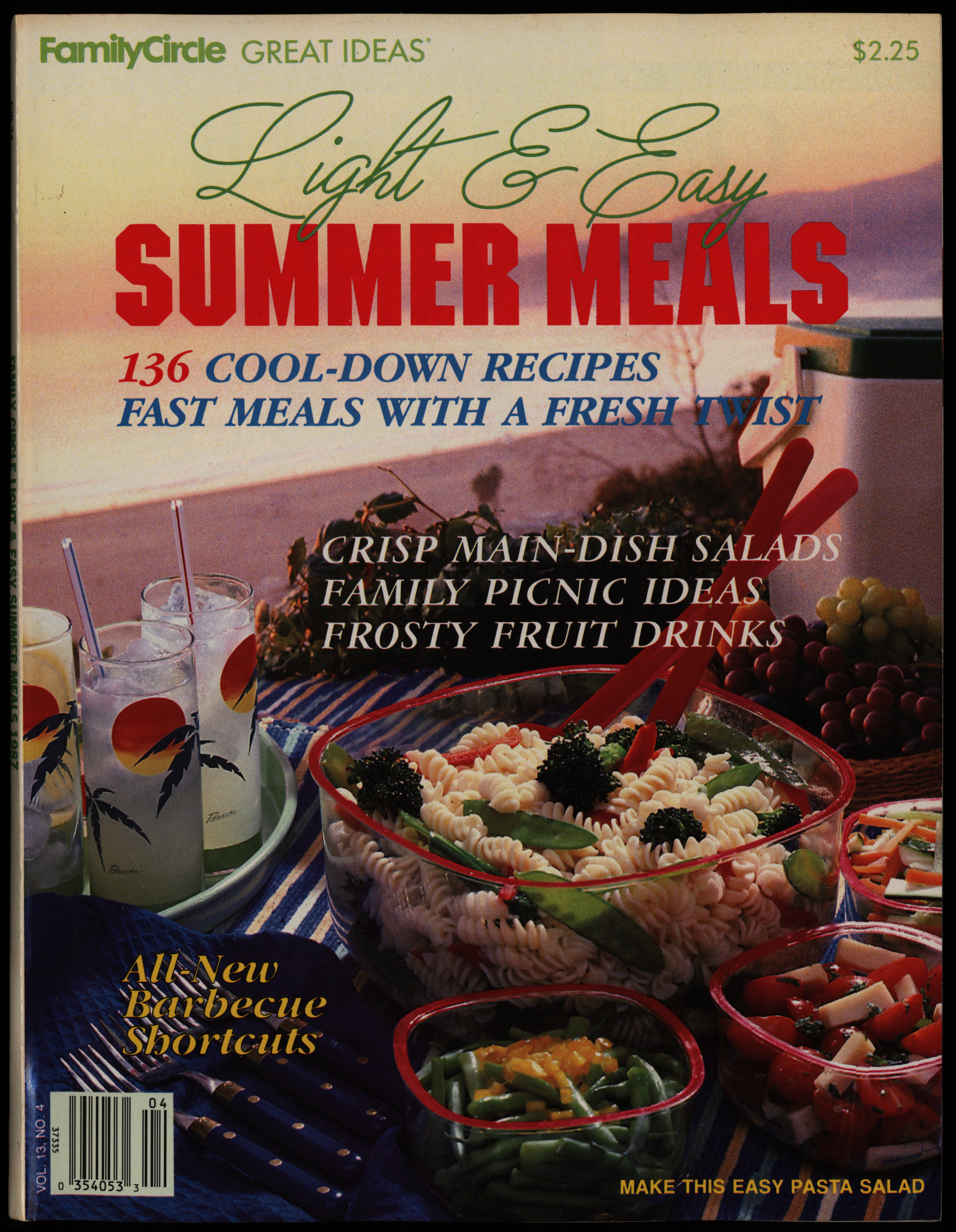
Great Ideas was a spin-off of Family Circle magazine. Family Circle was first launched in September 1932, and it was initially distributed for free at Piggly Wiggly grocery stores. Since its inception, the magazine primarily included topics such as homemaking and child-rearing. Family Circle continued to publish magazines until it closed in 2019, after running 87 years.
Great Ideas centered mainly around fashion, crafts, home decor, baking, and cooking, and were published five times a year. This edition of Great Ideas, Light & Easy Summer Meals, focuses on easy summer meals to make for families. It highlights the transition into diet culture at the end of the 1980s through the use of the word "light" in the title. Past editions of the magazine, particularly in the 1970s, included titles such as "Easy Summer Meals," "Quick and Thrifty Meals," or "Easy Budget Meals." Family Circle in the late 1980s began to transition to including language such as "diet," "low fat," and "light." "Light" meals and products, meaning products low in fat and calories, were popular, as dietary fat was blamed for weight gain and heart disease.
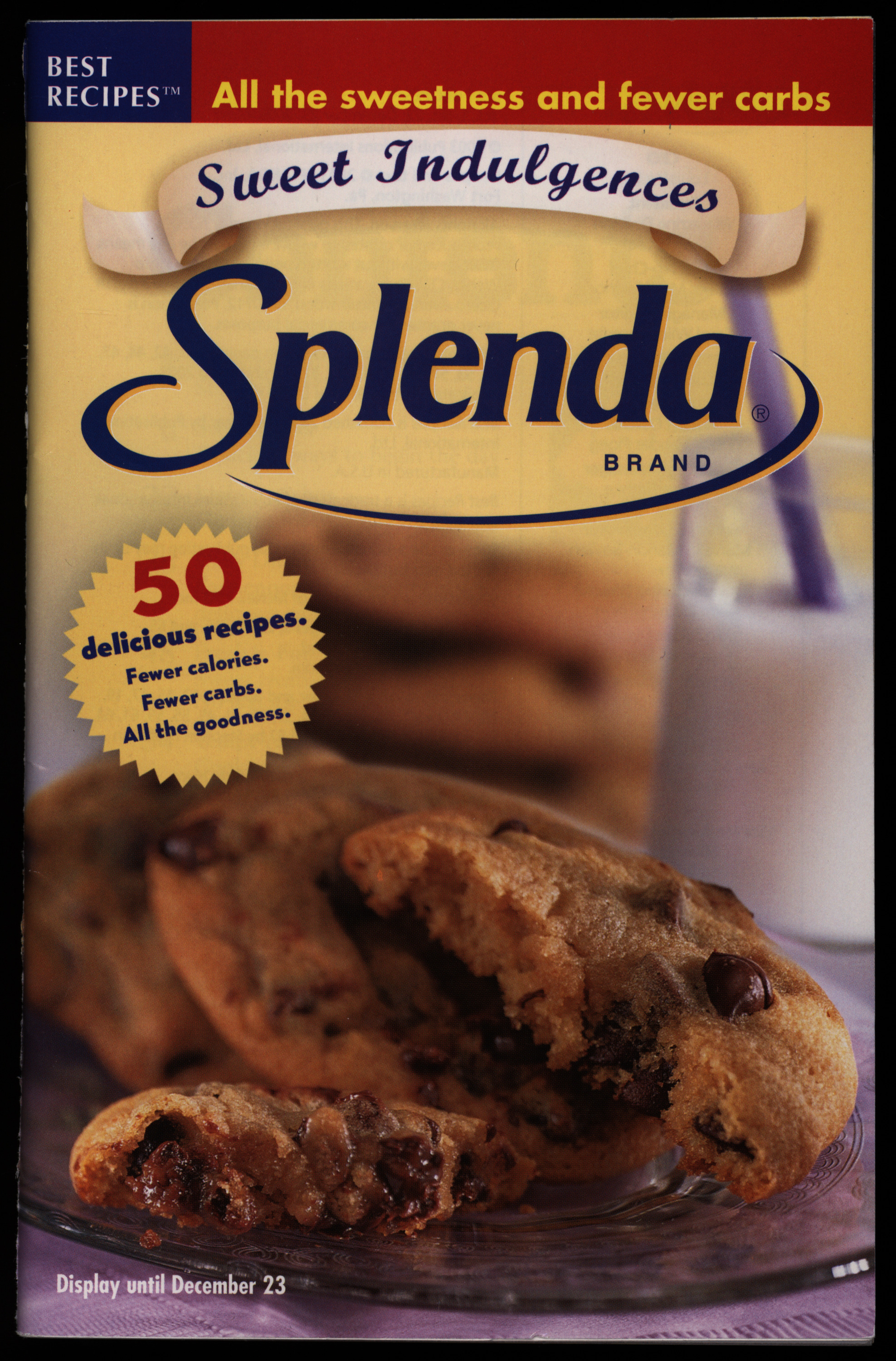
Sucralose, a sugar alternative most commonly known under the brand name Splenda, was introduced in the 1990s as a "miracle" sweetener with the tagline, "Made from sugar, so it tastes like sugar." The rise of low-carb, fat-free and sugar free diets led to the popularity of Splenda and other artificial sweeteners. These sweeteners came in small, easily transportable packets, often stashed in the purses of 1990s moms on the go.
Best Recipes: Sweet Indulgences Splenda Brand was a specialty series of cookbooks and booklets published by the Splenda brand, featuring diabetes-friendly and low-calorie options. Best Recipes: Sweet Indulgences booklets were published only for about two years, from 2003 to 2004, after which Splenda transitioned to full-scale recipe books.
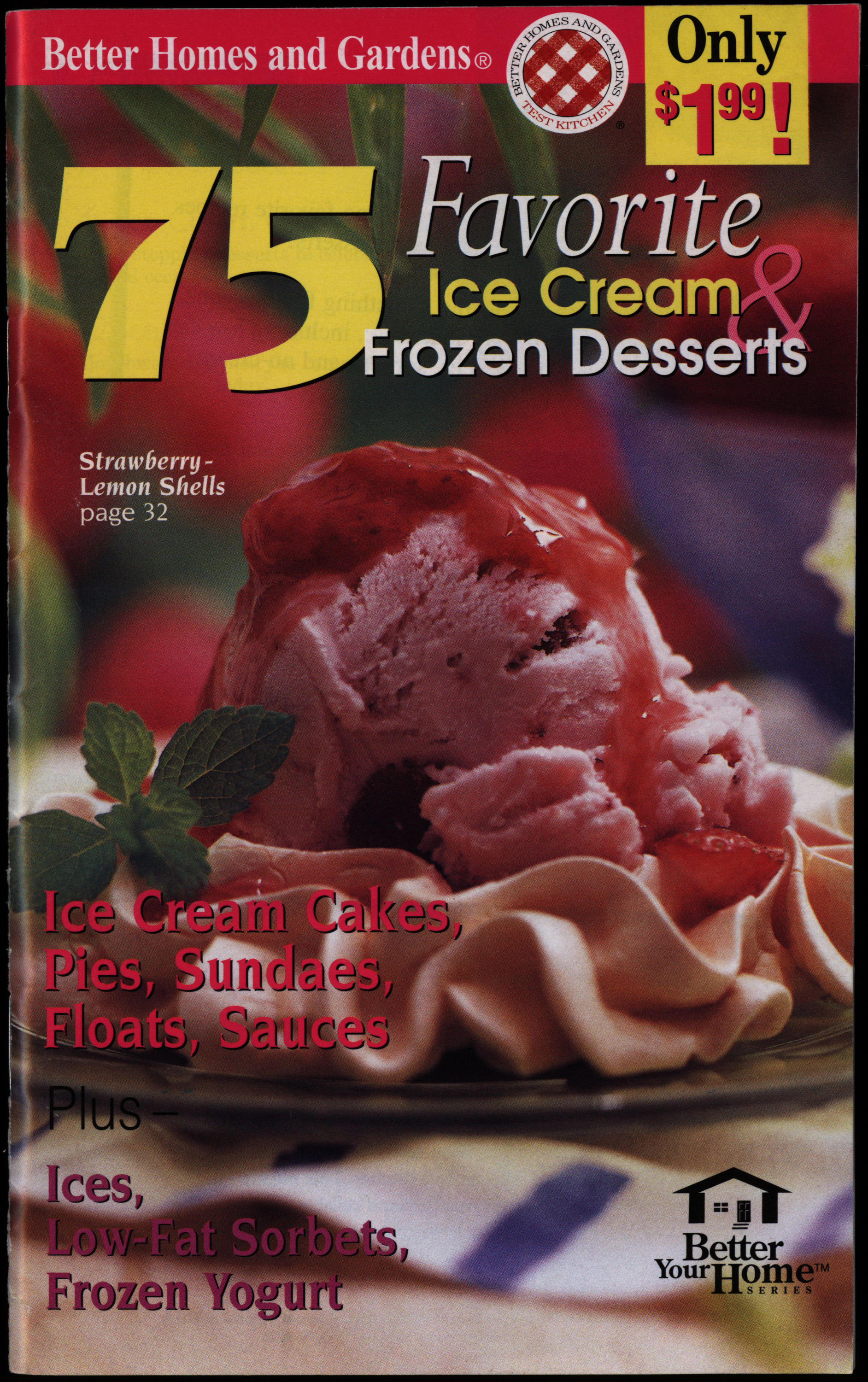
The 1990s were the golden age of ice cream and frozen desserts. Summer in the 1990s often entailed spending all day outside, and chasing down the ice cream truck for a frozen treat. While 1990s moms did not often indulge in ice cream due to intense pressure from diet culture, switching to "healthier" alternatives like frozen yogurt or low-fat ice cream, most did provide their children with regular ice cream.
Better Homes and Gardens (BHG), the publisher of 75 Favorite Ice Cream and Frozen Desserts, started publishing in 1922 under the name Fruit, Garden, and Home, before changing its name in 1924. The magazine offered recipes, garden advice, and contests. BHG still publishes magazines today, and has an archive of past magazines on their website.
In 1928, BHG established their test kitchen, and began publishing cookbooks and special edition recipe magazines. 75 Favorite Ice Cream and Frozen Desserts is one such publication, as a 1998 standalone special recipe booklet that provides many summer dessert recipes, including ice cream cakes, pies, sundaes, floats, sauces, ices, sorbets, and frozen yogurt.
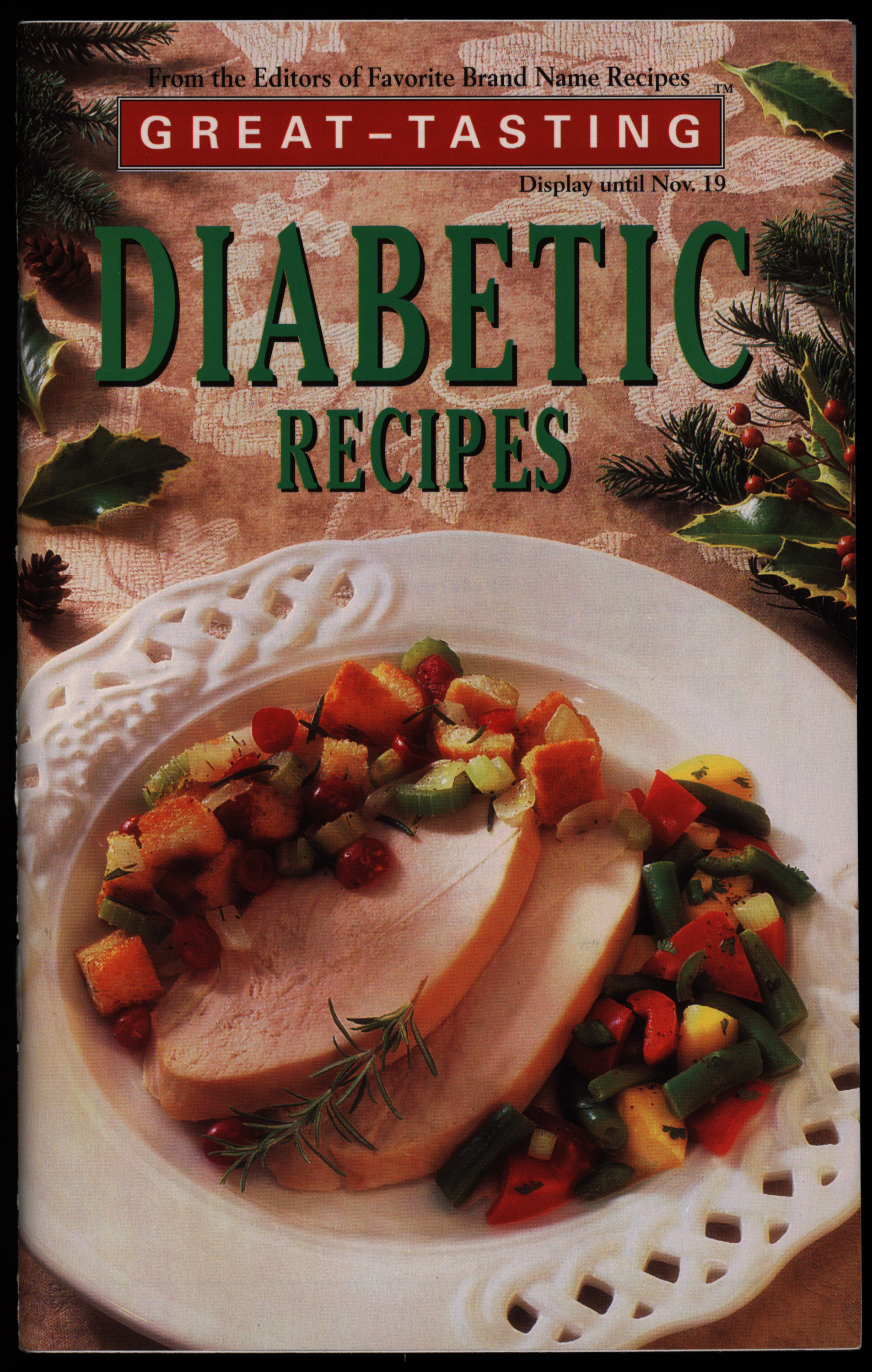
Great Tasting Diabetic Recipes was created by Publications International, Ltd. Founded in 1967 by CEO Louis Weber, the company creates a variety of different titles, including cooking magazines like this issue seen here. This magazine is no longer in print, but each issue focused on a different type of food, health concern, or food preparation. This is volume 1, number 6 of the series, and it focuses on healthy, but flavorful recipes for people with diabetes.
The magazine opens with facts about diabetes and how to manage it, then moves into the recipes. The layout is simple to follow, including an index at the back of the issue, making it more accessible to first-time readers. The recipes are broken into categories, including: appetizers and drinks, salads and soups, main dishes, side dishes, and desserts. The goal of this issue was to introduce readers to recipes for every meal of the day that could help them combat diabetes via diet therapy. This issue also makes use of microwaves to speed the cooking time for some of its recipes.
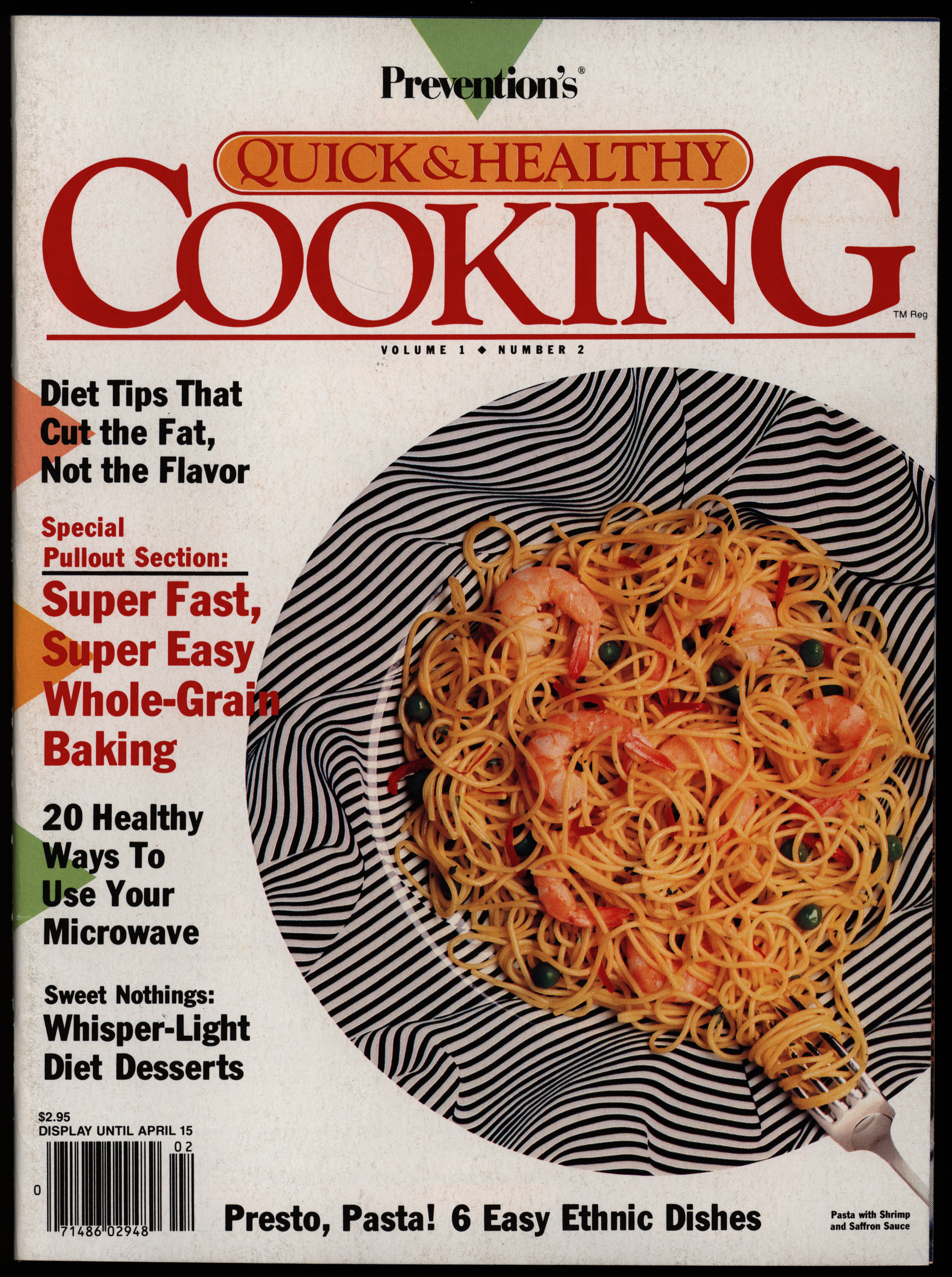
Quick & Healthy Cooking was a Prevention magazine special that was published bimonthly by Rodale Press, Inc. Along with Quick & Healthy, other specials included familiar names like Men’s Health and Women’s Health! Founded in 1950, Prevention was initially published by Rodale, Inc. but has since been acquired by Hearst Magazine in 2018. Prevention focuses on wellness, fitness, beauty, and nutrition and is still available in print and online today.
This issue features soups that “yield high health and flavor,” food preservation tips, “Whisper-light desserts that don’t taste like a diet,” whole-grain baking, midwinter salads, chef secrets, quick pizza, easy stir-fry, and diet party foods. This item covers a vast array of subjects over ninety-six pages and even discusses “healthy” microwave techniques. It also includes a travel log section about pasta and some outdated references to “ethnic dishes.” They also have an interesting symbol key that includes clock illustrations to quickly denote how long each recipe takes to make.