Lost Innocence
Title
Lost Innocence
Creator
Daniel, Hillary
Abstract
The MMIW (Murdered and Missing Indigenous Women) is a movement that was created in 2015 to promote awareness and bring some sort of relief to the victims’ families. It is said that, “ACROSS THE UNITED STATES AND CANADA, NATIVE WOMEN AND GIRLS ARE
BEING TAKEN OR MURDERED AT AN UNRELENTING RATE.” In 2016, there were 5,712 reports of missing American Indian and Alaska Native women and girls. The U.S. Department of Justice only logged 116 (The National Crime Information Center NamUs and Institute). The
youngest victim was a baby less than one month old, and the oldest victim was an 83-year-old (The National Crime Information Center NamUs and Institute). The MMIWR stated, “On some reservations, Native women face murder rates more than ten times the national average (Missing and murdered indigenous women and relatives (MMIWR).” No research has been done on rates
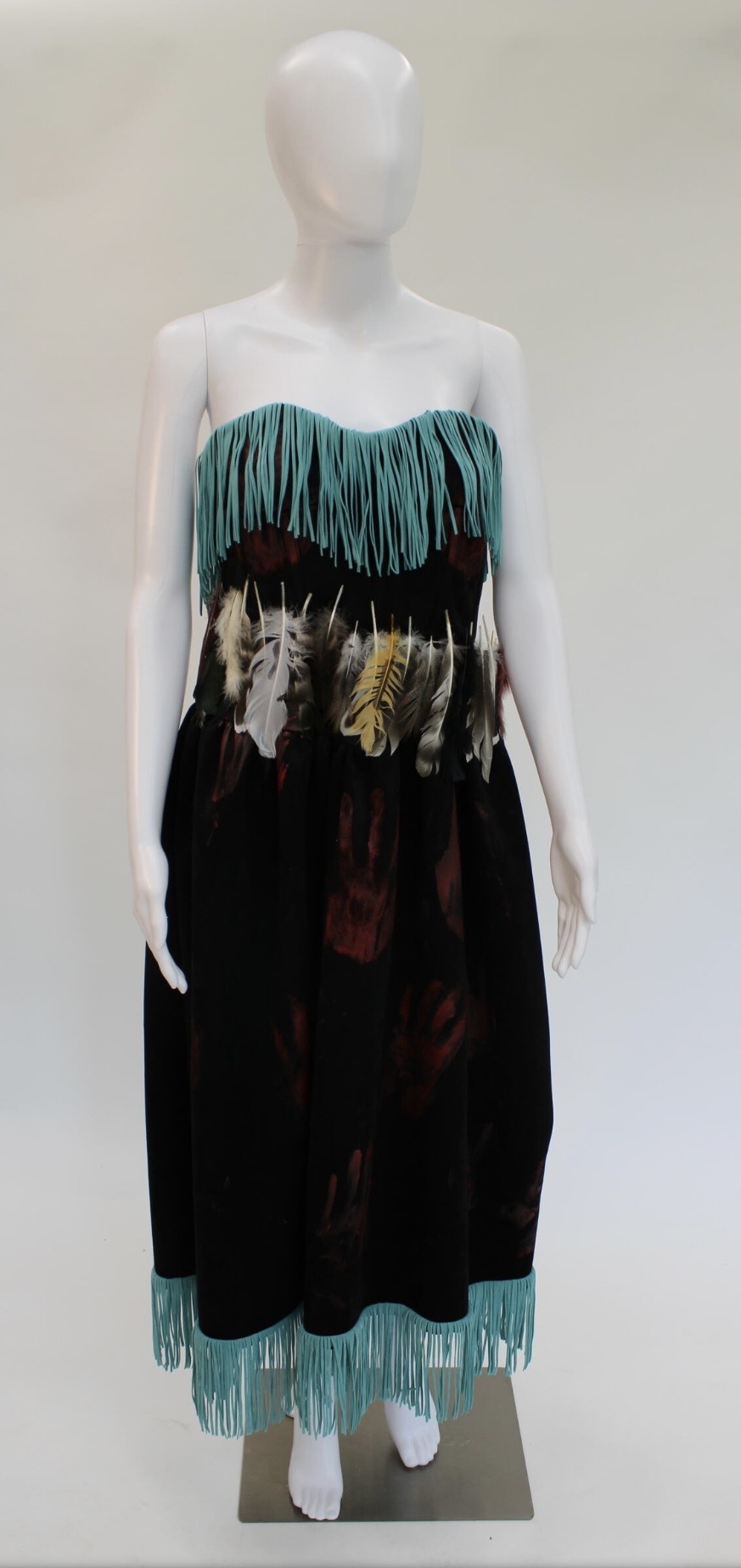
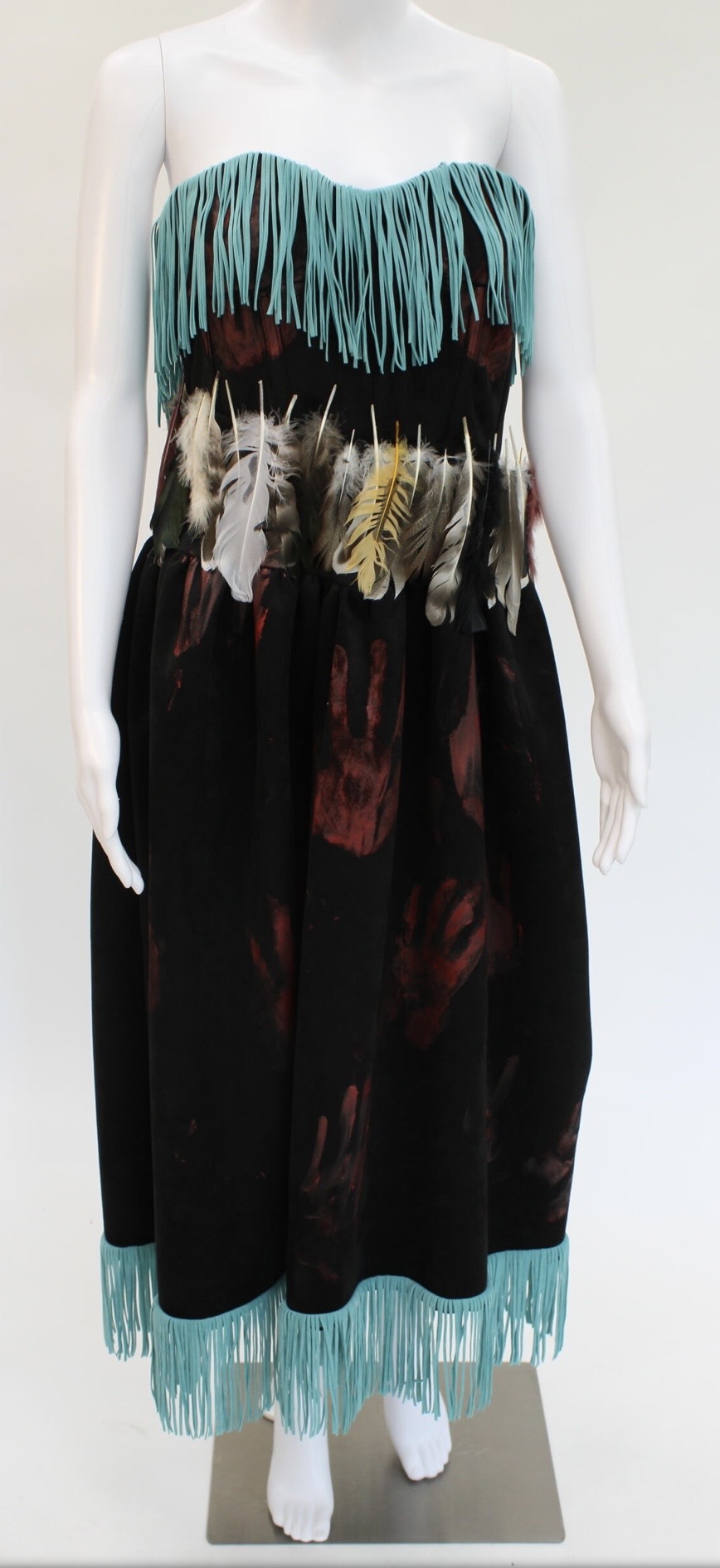
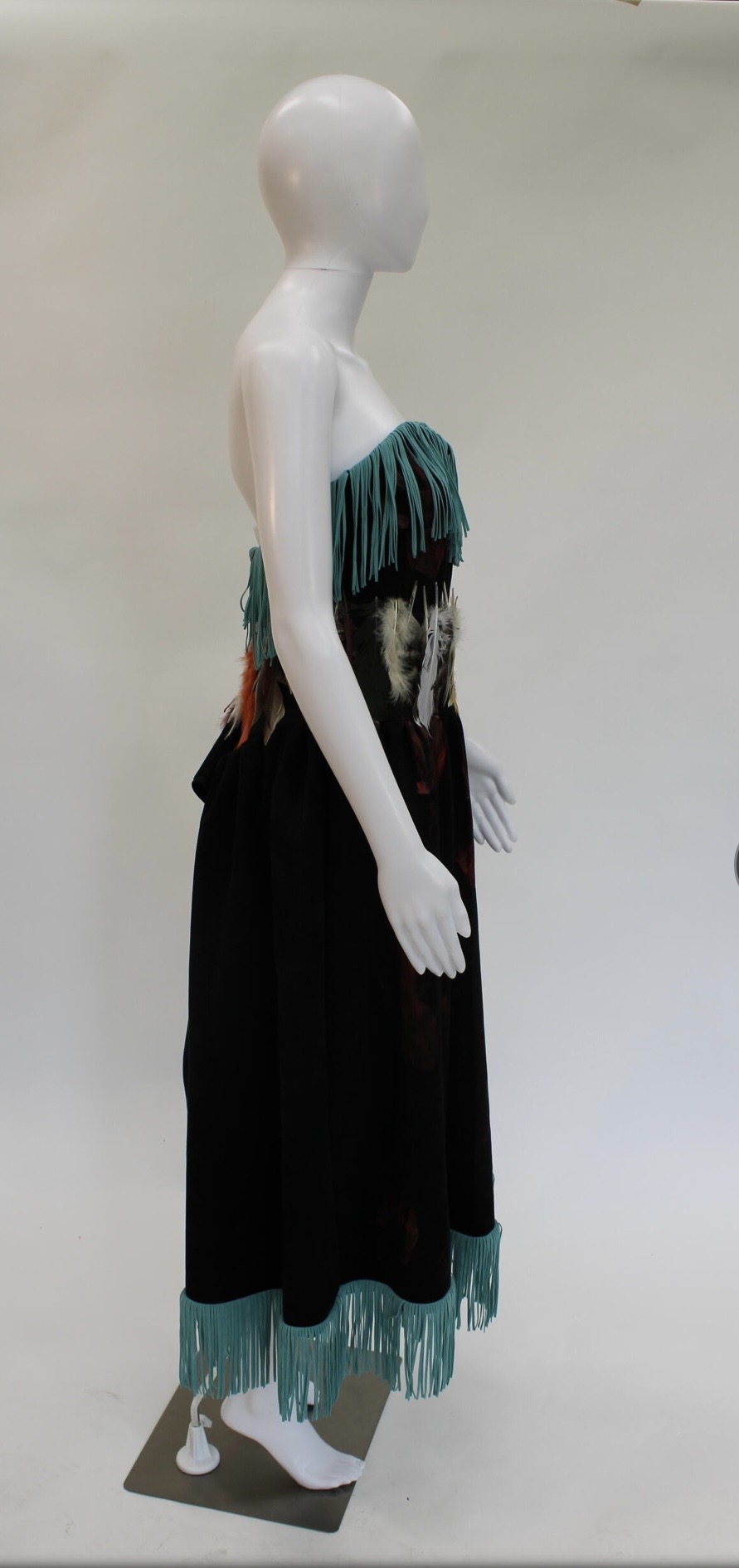
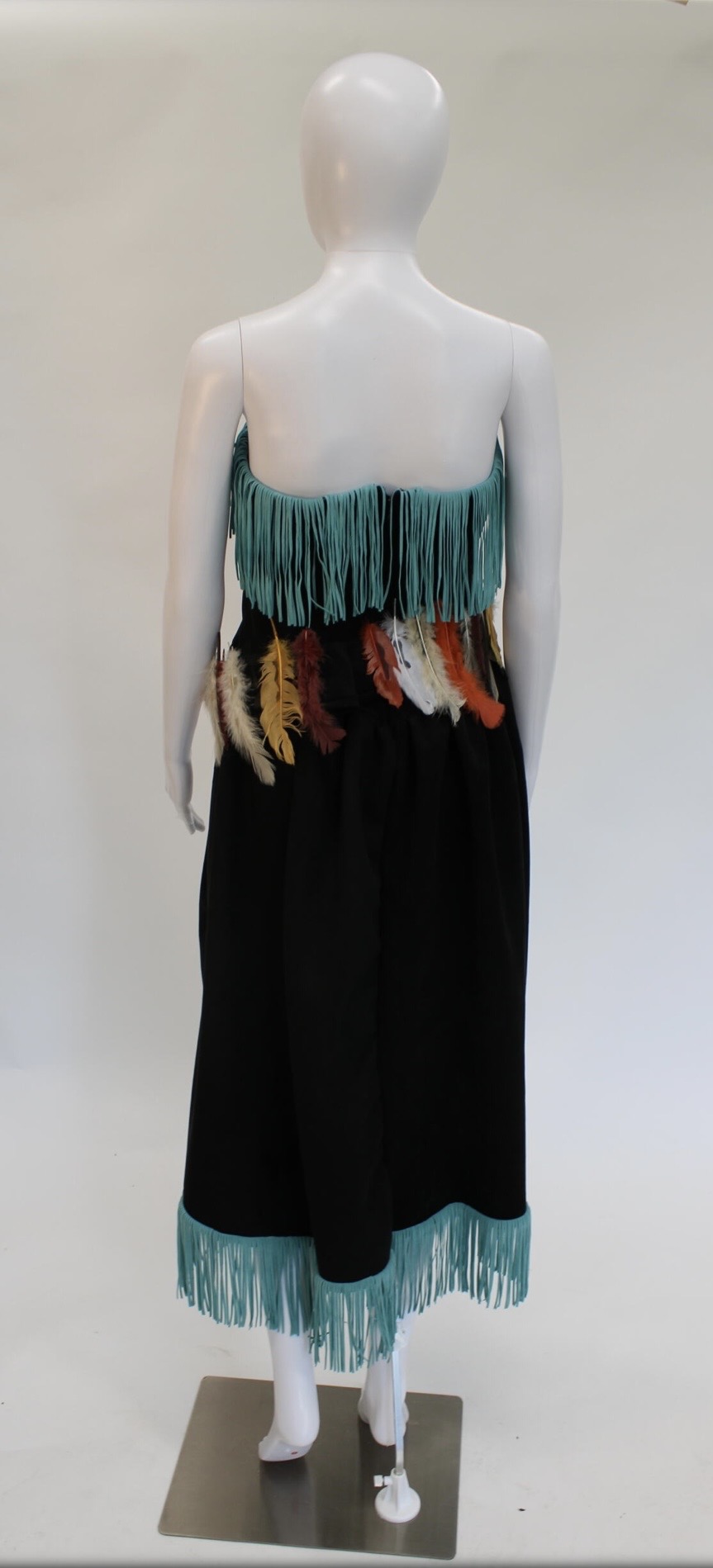
of violence against this group living in urban areas, which is an issue because about 71 percent of these people live in urban areas (Missing and murdered Indigenous People Crisis). In Native American culture, it is believed that the dead can see red. So, with this being said, a red hand symbolizes the connection between the spiritual and physical worlds. Wearing red invokes the help of our ancestors and spiritual guides. With this knowledge, putting these elements into clothing can be beneficial to further bring awareness and tell a story to the world
around us. To achieve this, focusing on designing factors like red handprints to represent blood, suede to mimic deer skin, Native American symbols that symbolize messages, and fringe traditionally used in Native wear can bring awareness to the movement and the need for more focused data. In conclusion, the purpose of this design is to deeply move and motivate the reader
of this statement to think about the people who were here first, realize how unjust this situation is, and want to learn more about this movement to bring justice to my people.
BEING TAKEN OR MURDERED AT AN UNRELENTING RATE.” In 2016, there were 5,712 reports of missing American Indian and Alaska Native women and girls. The U.S. Department of Justice only logged 116 (The National Crime Information Center NamUs and Institute). The
youngest victim was a baby less than one month old, and the oldest victim was an 83-year-old (The National Crime Information Center NamUs and Institute). The MMIWR stated, “On some reservations, Native women face murder rates more than ten times the national average (Missing and murdered indigenous women and relatives (MMIWR).” No research has been done on rates
of violence against this group living in urban areas, which is an issue because about 71 percent of these people live in urban areas (Missing and murdered Indigenous People Crisis). In Native American culture, it is believed that the dead can see red. So, with this being said, a red hand symbolizes the connection between the spiritual and physical worlds. Wearing red invokes the help of our ancestors and spiritual guides. With this knowledge, putting these elements into clothing can be beneficial to further bring awareness and tell a story to the world
around us. To achieve this, focusing on designing factors like red handprints to represent blood, suede to mimic deer skin, Native American symbols that symbolize messages, and fringe traditionally used in Native wear can bring awareness to the movement and the need for more focused data. In conclusion, the purpose of this design is to deeply move and motivate the reader
of this statement to think about the people who were here first, realize how unjust this situation is, and want to learn more about this movement to bring justice to my people.
Date
2026
Citation
Daniel, Hillary, “Lost Innocence,” MU Libraries Digital Exhibits and Online Forums, accessed October 20, 2026, https://library.missouri.edu/exhibits/items/show/275.